Professional commercial display solution provider

Bar LCD Display Technology: Applications, Design Considerations, and Industry Trends
ntroduction to Shelf Bar LCD Display Architecture
Shelf bar LCD displays, also known as stretched or ultra-wide LCD modules, are specifically engineered for applications where conventional display formats cannot meet spatial or integration requirements.
In retail environments, especially shelf-edge systems, the available installation area is typically limited in height but extended in width. This creates a need for display modules with non-standard aspect ratios that can deliver clear and continuous visual output within constrained mechanical structures.
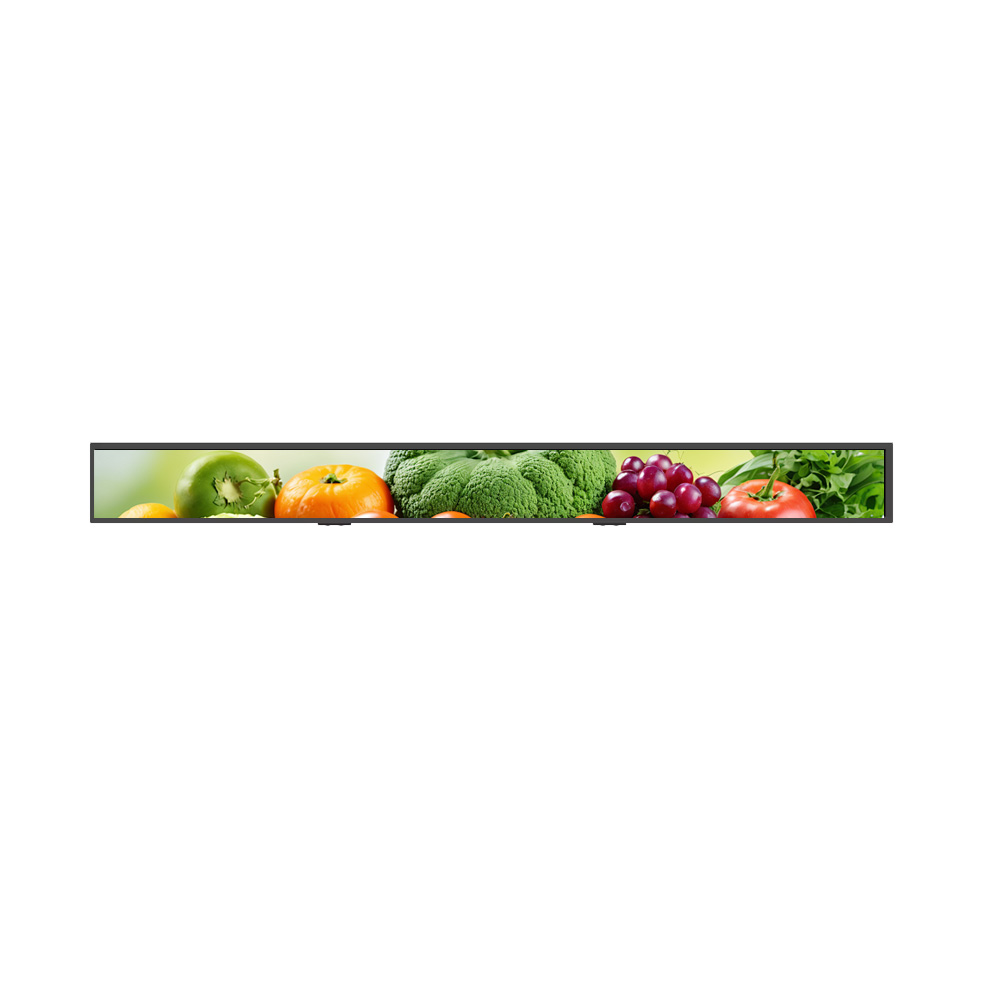
A typical example can be found in this 23.1-inch shelf bar LCD display, which demonstrates how ultra-wide panels are adapted for commercial display integration.
Mechanical and Structural Design Considerations
Unlike standard 16:9 or 4:3 LCD modules, shelf bar displays are designed with elongated active areas and compact height profiles. This introduces several engineering considerations:
- Mounting compatibility: The display must align with standard shelf rails or custom brackets
- Thermal management: Narrow enclosures require efficient heat dissipation design
- Structural rigidity: Longer panels must maintain mechanical stability without deformation
The slim form factor enables direct embedding into shelf systems without altering the overall retail fixture design, which is critical for large-scale deployment.
Display Characteristics and Optical Performance
From a display engineering perspective, shelf bar LCD modules are optimized for readability and consistency rather than peak visual performance.
Key optical characteristics include:
- Wide viewing angle (typically up to 178°) to ensure visibility across different customer positions
- Uniform brightness distribution across the elongated panel
- Anti-glare surface treatment to reduce reflections under retail lighting
These features ensure that content remains legible even in complex in-store lighting environments.
Interface and System Integration
Shelf bar LCD displays are commonly integrated into larger digital signage systems. Therefore, interface compatibility is a critical factor.
Typical integration features include:
- LVDS or eDP interface for stable signal transmission
- Support for embedded systems (e.g., Android boards or media players)
- Compatibility with centralized content management systems (CMS)
This allows the display to function as part of a networked retail system, where content such as pricing and promotions can be updated remotely.
In practical deployments, integrators often select modules like the ultra-wide bar LCD module for shelf edge display due to their balance between resolution, reliability, and integration flexibility.
Reliability and Continuous Operation Requirements
Retail shelf-edge displays are typically required to operate for extended periods, often in 24/7 or near-continuous conditions.
To meet these demands, shelf bar LCD modules are designed with:
- Long backlight lifespan (commonly ≥50,000 hours)
- Stable operation under constant usage
- Resistance to temperature variations in indoor commercial environments
These factors are essential to minimize maintenance and ensure consistent performance across multiple store locations.
Application in Digital Shelf Edge Systems
From a system-level perspective, shelf bar LCD displays serve as a key interface between backend data systems and in-store customer interaction.
They are widely used in:
- Electronic shelf labeling (ESL) enhancement systems
- Dynamic pricing displays
- Product information broadcasting at shelf level
By replacing static labels with digital displays, retailers can synchronize pricing, promotions, and inventory data in real time, improving operational efficiency and reducing manual intervention.
Advantages Over Conventional Display Formats
Compared to traditional LCD modules, shelf bar displays offer several structural and functional advantages:
- Better utilization of horizontal space
- Reduced visual obstruction of products
- Improved alignment with customer viewing behavior
These advantages make them particularly suitable for modern retail environments where both space efficiency and information clarity are critical.
Conclusion
Shelf bar LCD displays represent a specialized category of display technology designed to address the unique constraints of shelf-edge applications.
Through optimized mechanical design, stable optical performance, and flexible system integration, they provide a reliable solution for digital retail infrastructure. As smart retail systems continue to evolve, ultra-wide LCD modules are expected to play an increasingly important role in delivering efficient and scalable in-store communication.
Recommended reading
 2025-12-29Commercial LCD Display Industry Trends and Market Insights for 2026
 2025-12-23Why Custom Commercial Displays Are Becoming Standard in Modern Systems
 2025-12-17Advancing Outdoor Visual Systems with High-Brightness, Wide-Temperature LCD Technology
 2025-12-10Outdoor Commercial LCD Modules for Wide Temperature High-Brightness Advertising Displays
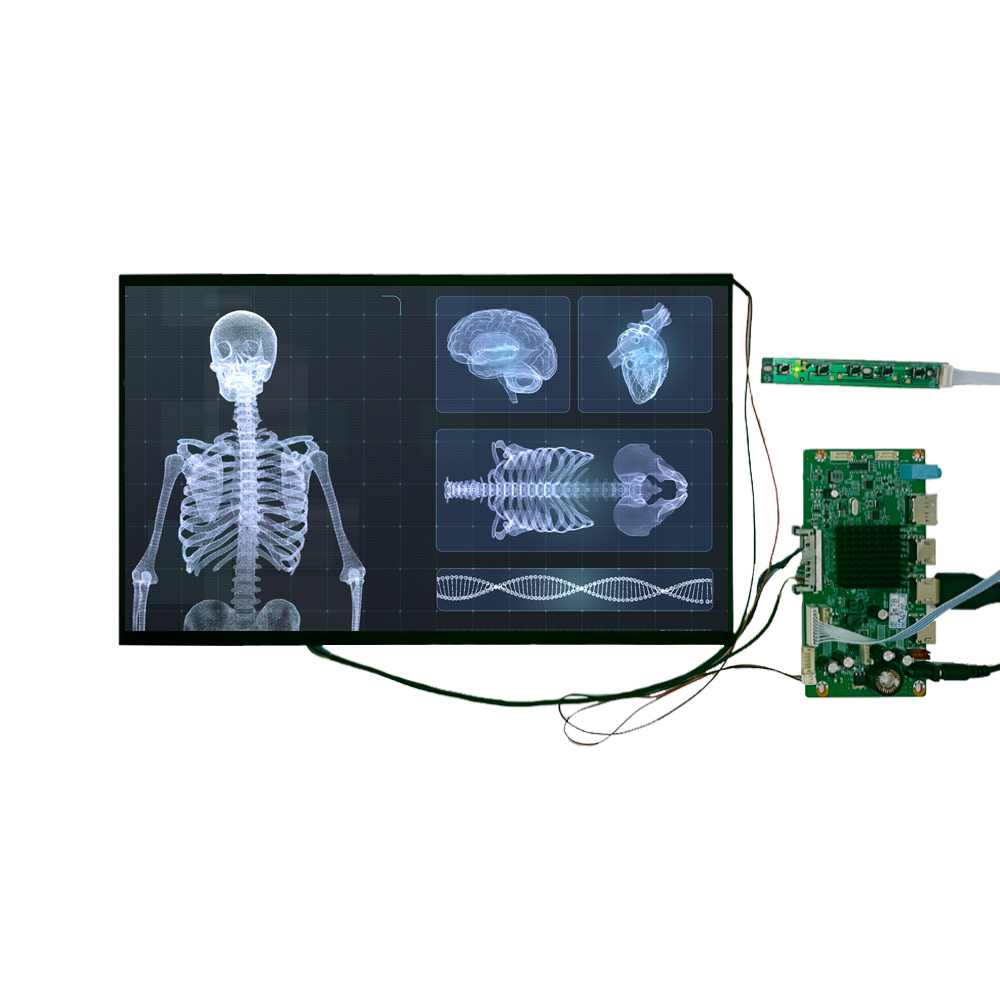 2025-12-0215,6-Zoll 4K Medical Display Module für hochpräzise diagnostische Bildgebung

Products
Commercial LCD Display
Gaming LCD Module
High Resolution Medical Display
Outdoor Display
E-ink LCD Display
Desk VR Monitor
OLED Display
Total Solutions
Service
Custom Touch Screen Solutions
Customized Frames & Protective Cover Glass
LCD Driver Board & Accessory Customization
Contact us
Contact Us
Copyright © 2025 Shenzhen Aptus Technology Co.,Ltd All Rights Reserved.

-
Inquire
- Top