Professional commercial display solution provider

The Evolution of Curved Commercial LCD Modules in Modern Gaming and Casino Environments
Sustainable and Energy-Efficient Curved LCD Modules: Key 2026 Advancements for Commercial Display Systems
In 2026, sustainability and operational efficiency have become primary decision factors for commercial display procurement. Curved LCD modules are now being re-engineered not only for visual performance but also for lower carbon footprints, reduced energy consumption, and full compliance with global environmental and safety standards. This article examines the latest material, design, and system-level innovations that enable curved LCD solutions to meet these stringent requirements while maintaining superior display quality.
The commercial display industry is under growing pressure to minimize environmental impact without sacrificing reliability or viewer experience. Curved panels, with their unique geometry, present both challenges and opportunities in this transition. Optimized designs can achieve significant gains in energy efficiency and recyclability, helping system integrators and end-users align with corporate ESG goals and regional regulations.
Core Sustainability Drivers Reshaping Curved LCD Development Manufacturers are prioritizing three interconnected areas: material selection, power optimization, and end-of-life recyclability. Advanced low-power LED architectures that follow the panel contour, combined with high-efficiency light-guide films, have reduced typical power draw by 20–28% compared to 2025 baselines. At the same time, the adoption of halogen-free substrates and mercury-free backlights is becoming standard, supporting stricter RoHS and REACH compliance.
Curved geometry itself contributes to efficiency gains by allowing more uniform light distribution across the active area, which reduces the need for higher backlight intensity in edge zones. When paired with intelligent local dimming algorithms that respond to ambient sensors, these panels deliver consistent brightness while consuming less energy during partial-content display scenarios common in commercial environments.
Regulatory Compliance and Operational Efficiency Gains Beyond environmental metrics, 2026 curved LCD modules incorporate built-in diagnostic features that simplify certification processes. Embedded sensors now monitor real-time power consumption, thermal profiles, and degradation patterns, generating automated compliance reports for energy-efficiency labeling programs. This data transparency accelerates project approvals and reduces auditing costs for large-scale deployments.
Field studies from early 2026 installations show that properly optimized curved systems achieve up to 35% lower annual electricity costs in 24/7 continuous operation compared to equivalent flat-panel alternatives of similar size and resolution.
Material and Manufacturing Innovations Recent breakthroughs include the use of bio-based polymers in frame components and recyclable optical films that maintain curvature precision without performance degradation. Laser-precision bonding techniques ensure adhesive uniformity across curved surfaces, minimizing material waste during production. These advances not only lower the overall carbon footprint but also improve long-term mechanical stability under varying environmental conditions.
Technical Sustainability & Efficiency Comparison: Curved LCD Modules 2025 vs 2026
| Metric | 2025 Baseline | 2026 Projection | Measurable Benefit |
|---|---|---|---|
| Power Consumption (Typical) | 85–110 W | 65–82 W | 20–28% reduction in electricity costs |
| Backlight Efficiency | Standard LED arrays | Contour-optimized + smart dimming | Lower heat output and extended component life |
| Recyclable Material Content | 35–45% | 65–78% | Easier end-of-life processing |
| Carbon Footprint (per unit) | Baseline | 22–30% lower | Stronger ESG compliance |
| Diagnostic & Reporting Features | Basic | Embedded real-time sensors | Automated regulatory reporting |
| Expected Operational Lifetime | 30,000–40,000 hours | 45,000–55,000 hours | Fewer replacements, lower waste |
Practical Implementation Benefits System integrators report faster project timelines when selecting 2026 curved LCD modules because pre-certified energy profiles and modular mounting systems reduce custom engineering efforts. The combination of lower power requirements and improved thermal characteristics also allows for more compact cabinet designs, freeing up valuable installation space in commercial venues.
Looking Ahead The trajectory for curved LCD technology in 2026 clearly points toward solutions that deliver visual excellence while meeting the highest standards of sustainability and efficiency. Organizations evaluating new display infrastructure should prioritize suppliers that provide transparent lifecycle data and modular upgrade paths.
Frequently Asked Questions (FAQ)
1. What makes curved LCD modules more sustainable in 2026? New contour-optimized LED arrays, bio-based materials, and higher recyclable content significantly reduce energy use and environmental impact while preserving display performance.
2. How much energy can be saved with the latest curved LCD designs? Optimized models typically achieve 20–28% lower power consumption compared to previous generations, translating into substantial operational cost savings over the product lifecycle.
3. Do 2026 curved LCDs meet strict environmental regulations more easily? Yes. Built-in sensors and automated reporting features streamline compliance with RoHS, REACH, and energy-labeling programs.
4. What role does local dimming play in energy efficiency? Intelligent local dimming aligned with the curved surface dynamically adjusts brightness zones, reducing unnecessary power draw without affecting visual uniformity.
5. Are the new materials in curved LCDs fully recyclable? Many components now reach 65–78% recyclable content, including optical films and frame polymers, simplifying end-of-life disposal.
6. How do sustainability improvements affect long-term reliability? Lower operating temperatures and reduced power stress extend backlight lifetime to 45,000–55,000 hours, decreasing replacement frequency and associated waste.
7. Can these energy-efficient curved modules maintain the same visual quality? Absolutely. Advanced light-guide films and uniform bonding ensure consistent brightness and color accuracy across the curved surface.
8. What installation advantages do sustainable curved LCDs offer? Modular mounting systems and pre-certified profiles shorten engineering time and reduce the need for extensive custom modifications.
9. How do manufacturers verify the sustainability claims? Independent third-party testing and embedded diagnostic data provide transparent, verifiable metrics for carbon footprint and energy performance.
10. Where can project teams access detailed sustainability data for curved LCD selection? Reputable suppliers now provide comprehensive lifecycle assessment reports, power consumption simulations, and compliance documentation to support informed decision-making.
Conclusion Sustainable and energy-efficient curved LCD modules represent a significant advancement for commercial display systems in 2026. By integrating lower power consumption, higher recyclable content, and built-in compliance tools, these solutions help organizations achieve environmental targets while delivering reliable, high-performance visuals. Early adopters are already realizing measurable reductions in operating costs and regulatory complexity.
For teams planning commercial display projects, evaluating these 2026 innovations early will ensure selections that balance visual impact with long-term sustainability and efficiency.
Recommended reading
 2025-12-29Commercial LCD Display Industry Trends and Market Insights for 2026
 2025-12-23Why Custom Commercial Displays Are Becoming Standard in Modern Systems
 2025-12-17Advancing Outdoor Visual Systems with High-Brightness, Wide-Temperature LCD Technology
 2025-12-10Outdoor Commercial LCD Modules for Wide Temperature High-Brightness Advertising Displays
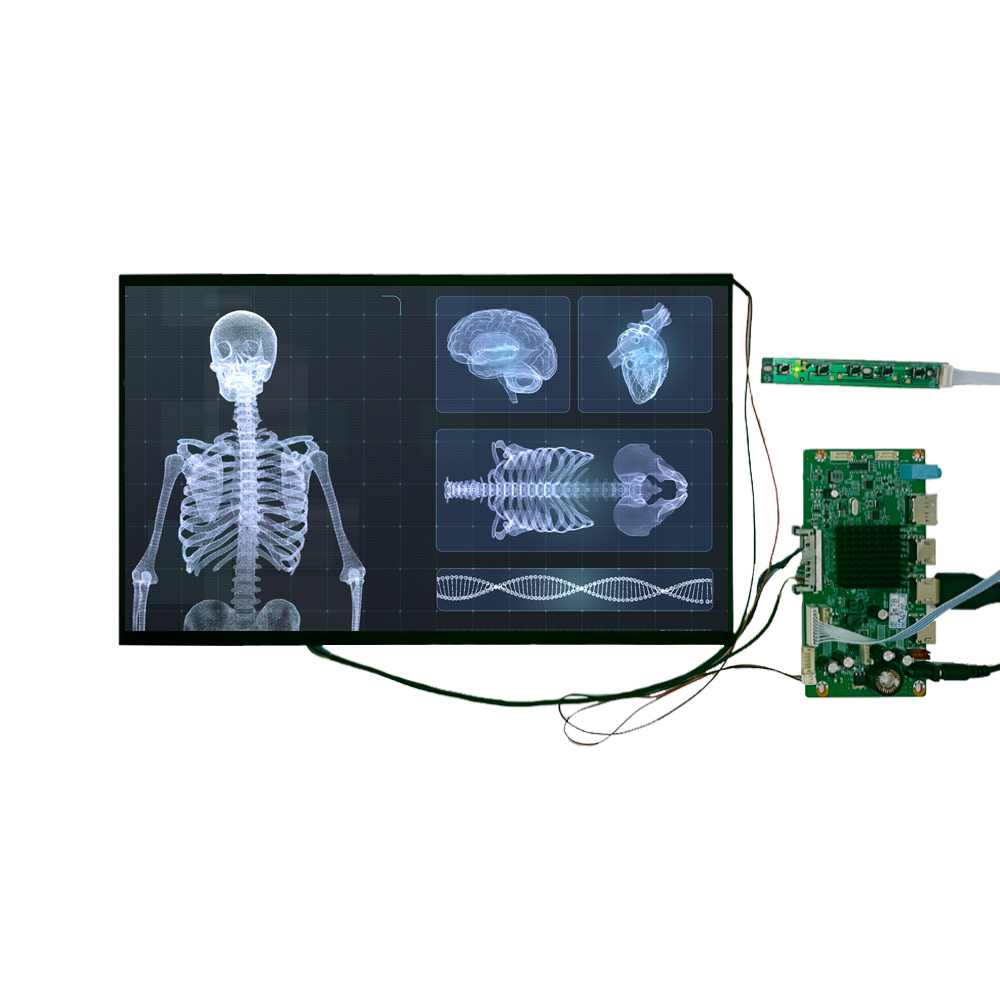 2025-12-0215,6-Zoll 4K Medical Display Module für hochpräzise diagnostische Bildgebung

Products
Commercial LCD Display
Gaming LCD Module
High Resolution Medical Display
Outdoor Display
E-ink LCD Display
Desk VR Monitor
OLED Display
Total Solutions
Service
Custom Touch Screen Solutions
Customized Frames & Protective Cover Glass
LCD Driver Board & Accessory Customization
Contact us
Contact Us
Copyright © 2025 Shenzhen Aptus Technology Co.,Ltd All Rights Reserved.

-
Inquire
- Top