Professional commercial display solution provider

LCD Panel Technology Explained: Brightness, Viewing Angles & Visual Quality
Introduction — Understanding LCD Panel Technology
LCD (Liquid Crystal Display) panels form the foundation of modern commercial displays. While the first article introduced 55-inch commercial LCDs and their applications, this article delves into how the underlying technology affects image quality, brightness, and viewing angles.
Whether you are designing retail signage, public information displays, or immersive aquarium backgrounds, understanding panel technology ensures the visuals are accurate, vibrant, and engaging.
1. Panel Types and Their Impact
Commercial LCD displays typically use one of several panel types:
-
IPS (In-Plane Switching): Offers wide viewing angles and accurate color reproduction, ideal for public spaces or aquarium simulations where multiple viewers are present.
-
VA (Vertical Alignment): Provides higher contrast ratios, better for environments where image depth is critical.
-
TN (Twisted Nematic): Fast response times but narrower viewing angles, less common in large-format commercial displays.
Internal Anchor Link to Core Article:
“For more on 55-inch commercial LCD applications, see our guide on 55-inch commercial LCD display: applications and benefits.”
2. Brightness and Contrast
-
Brightness (Nits): Determines visibility in ambient lighting. Indoor retail or aquarium setups typically require 450–700 nits. Higher brightness ensures content remains visible even in bright conditions.
-
Contrast Ratio: Defines the difference between darkest black and brightest white. High contrast is critical for aquarium simulation to make colors and textures vivid and lifelike.
Practical Tip: Choose a display with adaptive backlight technology for mixed lighting environments to prevent glare while maintaining realistic visuals.
3. Color Accuracy and Image Uniformity
-
Color reproduction matters for realistic simulations and engaging retail content.
-
Commercial displays often undergo factory calibration for accurate color across the entire screen.
-
Uniformity ensures there are no dark spots or color shifts, which is especially critical for aquarium or scenic background applications.
4. Viewing Angles and User Experience
-
Wide viewing angles allow multiple viewers to see consistent colors and brightness.
-
IPS panels usually offer up to 178° horizontal and vertical viewing angles, ideal for retail aisles, public info displays, or aquarium simulations.
-
Narrow viewing angles can distort colors, reduce readability, and compromise immersive visual experiences.
5. Backlight Technology and Longevity
-
LED backlights are standard for large commercial LCDs, providing brightness and energy efficiency.
-
Edge-lit or full-array LED backlights influence uniformity and depth perception.
-
For continuous commercial use, select panels rated for 50,000+ hours, minimizing maintenance in retail, exhibition, or aquarium applications.
6. Applications Enhanced by LCD Technology
Retail Digital Signage
-
Accurate color, brightness, and wide viewing angles make product displays and advertisements stand out.
-
Large-format LCDs help engage customers in stores and enhance purchase intent.
Aquarium and Simulation Backgrounds
-
Realistic visuals depend on high resolution, uniform backlighting, and consistent color reproduction.
-
Large displays create immersive underwater or thematic environments.
Public Information Displays
-
Airports, museums, and malls require clear, readable content for multiple viewers.
-
Technology choices directly affect legibility, color accuracy, and overall experience.
Internal Anchor Link to Next Cluster Article:
“Learn more about installation and maintenance best practices in our next guide on LCD display setup and care.”
7. Choosing the Right LCD Panel
-
Panel Type: IPS for color and viewing angles, VA for contrast.
-
Brightness Needs: Indoor vs ambient light exposure.
-
Resolution: Full HD or 4K for simulation or immersive backgrounds.
-
Connectivity: Ensure HDMI, DisplayPort, or custom inputs are supported.
-
Usage Duration: Commercial-grade panels with longer rated life for reliability.
FAQ — Common Questions About LCD Panel Technology
Q1: Which panel type is best for aquarium simulations?
A: IPS panels are preferred for their wide viewing angles and color accuracy.
Q2: How bright should a retail LCD display be?
A: Typically 450–700 nits, depending on ambient light.
Q3: Does higher contrast improve visual realism?
A: Yes, higher contrast ratios enhance depth and make scenes appear more vivid, especially in simulation or aquarium displays.
Q4: How long do commercial LCD panels last?
A: Usually 50,000–60,000 hours, depending on usage and maintenance.
Q5: Are LED backlights better than fluorescent?
A: Yes, LED backlights are more energy-efficient, brighter, and provide more uniform illumination.
Q6: Can color calibration be adjusted?
A: Many commercial displays allow software or factory calibration to maintain color accuracy over time.
Conclusion
Understanding LCD panel technology—panel type, brightness, contrast, color accuracy, and backlight systems—is essential for maximizing the impact of commercial displays. Whether for retail signage, public information, or immersive aquarium and simulation backgrounds, selecting the right panel ensures clarity, realism, and long-term reliability.
Recommended reading
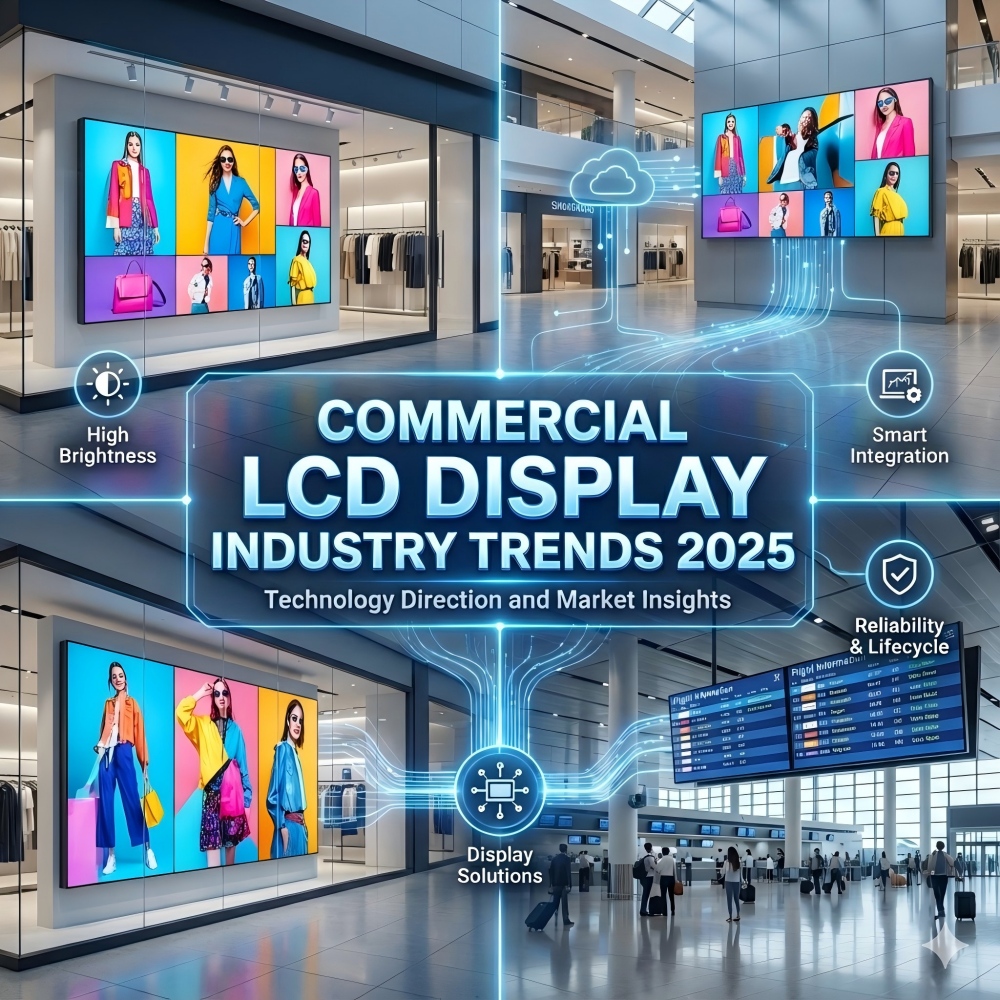 2025-12-29Commercial LCD Display Industry Trends and Market Insights for 2026
 2025-12-23Why Custom Commercial Displays Are Becoming Standard in Modern Systems
 2025-12-17Advancing Outdoor Visual Systems with High-Brightness, Wide-Temperature LCD Technology
 2025-12-10Outdoor Commercial LCD Modules for Wide Temperature High-Brightness Advertising Displays
 2025-12-0215,6-Zoll 4K Medical Display Module für hochpräzise diagnostische Bildgebung

Products
Commercial LCD Display
Gaming LCD Module
High Resolution Medical Display
Outdoor Display
E-ink LCD Display
Desk VR Monitor
OLED Display
Total Solutions
Service
Custom Touch Screen Solutions
Customized Frames & Protective Cover Glass
LCD Driver Board & Accessory Customization
Contact us
Contact Us
Copyright © 2025 Shenzhen Aptus Technology Co.,Ltd All Rights Reserved.

-
Inquire
- Top