Professional commercial display solution provider

- Home
-
Products
Professional commercial display solutions
-
About us
In good faith to customers
-
Service
Provide professional and meaningful advice
-
Knowledge Center
Innovation for development
- Contact us
Commercial Display vs TV: Which Is Better for Digital Signage and Business Use?
Commercial Display vs TV: Which Is Better for Digital Signage and Business Use?
Quick Answer
A commercial display is designed for professional environments such as digital signage, retail advertising, transportation systems, and 24/7 operation, while a consumer TV is designed mainly for home entertainment. Commercial displays typically offer higher brightness, longer operating lifespan, better heat management, portrait installation support, and remote management features that TVs usually do not provide.
For business applications requiring stable long-term operation, commercial displays are generally the better solution.
Quick Comparison
| Feature | Commercial Display | Consumer TV |
|---|---|---|
| Operating Time | 16/7 or 24/7 | 4–8 hours/day |
| Brightness | 500–3000+ nits | Usually lower |
| Installation | Landscape & portrait | Mostly landscape |
| Reliability | Commercial-grade | Consumer-grade |
| Remote Management | Supported | Limited |
| Lifespan | Longer | Shorter |
| Application | Digital signage, kiosks, transportation | Home entertainment |
What Is a Commercial Display?
A commercial display is a professional LCD display solution built for continuous business operation. These displays are commonly used in:
- Retail digital signage
- Transportation systems
- Self-service kiosks
- Menu boards
- Shopping malls
- Corporate environments
- Industrial applications
Compared with TVs, commercial displays are designed for stability, long operating hours, and professional installation environments.
Many commercial displays also support:
- 24/7 continuous operation
- High brightness for sunlight visibility
- Touch screen integration
- Open frame installation
- Ultra-wide stretched formats
- Remote content management
For example, high brightness commercial displays are commonly used for window-facing signage and outdoor digital signage projects where sunlight readability is important.
Recommended internal link anchor text:
- high brightness commercial displays
- outdoor commercial LCD displays
What Is a Consumer TV?
A consumer TV is primarily designed for home entertainment applications such as:
- Streaming media
- Movies
- Gaming
- Home theater systems
Although modern TVs may offer high resolution and attractive pricing, they are usually not optimized for demanding commercial environments.
In business applications with long operating hours, TVs may experience:
- Overheating
- Reduced lifespan
- Lower brightness performance
- Image retention issues
- Stability problems
Commercial Display vs TV: Main Differences
Operating Time and Reliability
One of the biggest differences is operating time.
Commercial displays are designed for:
- 16/7 operation
- 24/7 operation
- Long-term continuous usage
This is important for environments such as:
- Airports
- Retail stores
- Subway systems
- Restaurants
- Shopping malls
Consumer TVs are generally designed for shorter daily usage periods.
For projects requiring stable continuous operation, industrial-grade commercial displays are typically preferred over consumer TVs.
Recommended internal link anchor text:
- industrial commercial displays
- 24/7 commercial display solutions
Brightness and Outdoor Visibility
Commercial displays usually provide significantly higher brightness than TVs.
This is critical for:
- Window-facing signage
- Bright retail environments
- Transportation displays
- Outdoor kiosks
Typical Brightness Levels
| Environment | Recommended Brightness |
|---|---|
| Indoor commercial use | 500–700 nits |
| Window-facing signage | 1000–2000 nits |
| Outdoor display | 1500+ nits |
High brightness displays improve readability under strong ambient lighting and sunlight conditions.
For outdoor and semi-outdoor projects, sunlight-readable LCD displays are commonly used to maintain visibility throughout the day.
Recommended internal link anchor text:
Installation Flexibility
Commercial displays are designed for flexible installation environments.
Many support:
- Portrait orientation
- Landscape orientation
- Video wall installation
- Open frame integration
- Ultra-wide stretched display layouts
TVs are mainly optimized for standard landscape home installation.
For retail shelf advertising and transportation systems, stretched bar LCD displays are often used because of their ultra-wide aspect ratio and flexible installation capability.
Recommended internal link anchor text:
- stretched bar LCD displays
- bar LCD display solutions
Remote Management
Commercial displays are often integrated into digital signage systems that require centralized management.
Businesses may need to:
- Update content remotely
- Schedule advertising playback
- Monitor screen status
- Manage multiple displays across locations
Commercial display systems commonly support these functions, while consumer TVs usually provide limited commercial management capabilities.
This is especially important for large-scale retail signage and transportation display networks.
Long-Term Cost Efficiency
Although consumer TVs may have lower upfront cost, commercial displays are often more cost-effective over time because they are designed for:
- Longer operating lifespan
- Stable continuous operation
- Lower maintenance frequency
- Better reliability
For long-term commercial deployment, reliability is often more important than initial hardware cost.
Common Applications for Commercial Displays
Retail Digital Signage
Commercial displays are widely used in:
- Retail advertising
- Shelf-edge displays
- Window signage
- Shopping mall advertising
High brightness and long operating hours are especially important in these environments.
For shelf-edge advertising applications, stretched LCD displays are commonly used to maximize advertising space in narrow installation areas.
Recommended internal link anchor text:
- retail stretched LCD displays
- shelf edge bar LCD displays
Transportation Displays
Transportation systems often require:
- Continuous operation
- Wide viewing angles
- Stable performance
- Custom display formats
Commercial displays are commonly used in:
- Airports
- Train stations
- Subway systems
- Bus information systems
Ultra-wide commercial displays are frequently used for transportation information systems because they can display route information efficiently in limited spaces.
Recommended internal link anchor text:
- transportation LCD display solutions
- ultra wide commercial displays
Self-Service Kiosks
Many kiosk systems use commercial open frame displays because they support:
- Touch functionality
- Embedded installation
- Long-term operation
- Custom integration
Open frame LCD displays are commonly integrated into self-service kiosks, vending machines, and smart city infrastructure.
Recommended internal link anchor text:
- open frame LCD displays
- kiosk display solutions
Can a TV Be Used for Digital Signage?
Yes, a TV can sometimes be used for small temporary signage projects.
However, for professional commercial environments that require:
- 24/7 operation
- High brightness
- Long-term reliability
- Remote management
commercial displays are generally the preferred solution.
How to Choose Between a Commercial Display and a TV
Businesses should consider:
| Requirement | Recommended Choice |
|---|---|
| 24/7 operation | Commercial Display |
| Outdoor visibility | Commercial Display |
| Retail signage | Commercial Display |
| Home entertainment | TV |
| Professional signage network | Commercial Display |
| Temporary low-cost use | TV |
For OEM and commercial projects, selecting the correct display solution depends on operating environment, installation conditions, brightness requirements, and operating time.
Commercial Display Solutions for OEM Projects
Commercial display solutions are available in various formats for digital signage and OEM integration, including:
- High brightness LCD displays
- Bar LCD displays
- Open frame displays
- Industrial touch displays
- Stretched LCD displays
These solutions are commonly used in:
- Transportation systems
- Retail signage
- Elevator advertising
- Self-service kiosks
- Smart city infrastructure
Related Questions
What Is a Bar LCD Display?
Bar LCD displays are ultra-wide commercial displays commonly used in transportation systems, retail shelf signage, and digital advertising applications.
Can Commercial Displays Run 24/7?
Yes. Many commercial displays are specifically designed for continuous 24/7 operation in professional environments.
What Brightness Is Needed for Outdoor Displays?
Outdoor displays typically require 1500 nits or higher brightness for visibility under direct sunlight.
Industrial LCD vs Consumer Display
Industrial displays are designed for demanding operating environments with higher durability and longer lifespan.
Related Display Solutions
- High Brightness Commercial LCD Displays
- Stretched Bar LCD Displays
- Open Frame LCD Displays
- Transportation Display Solutions
- Industrial Commercial Displays
Conclusion
Commercial displays and consumer TVs may look similar, but they are designed for very different operating environments.
Commercial displays are built for:
- Long operating hours
- Professional signage systems
- Higher brightness environments
- Stable long-term performance
- Flexible installation
- Remote management
For retail signage, transportation systems, kiosks, and other business applications, commercial displays are generally the more reliable and scalable long-term solution.
Recommended reading
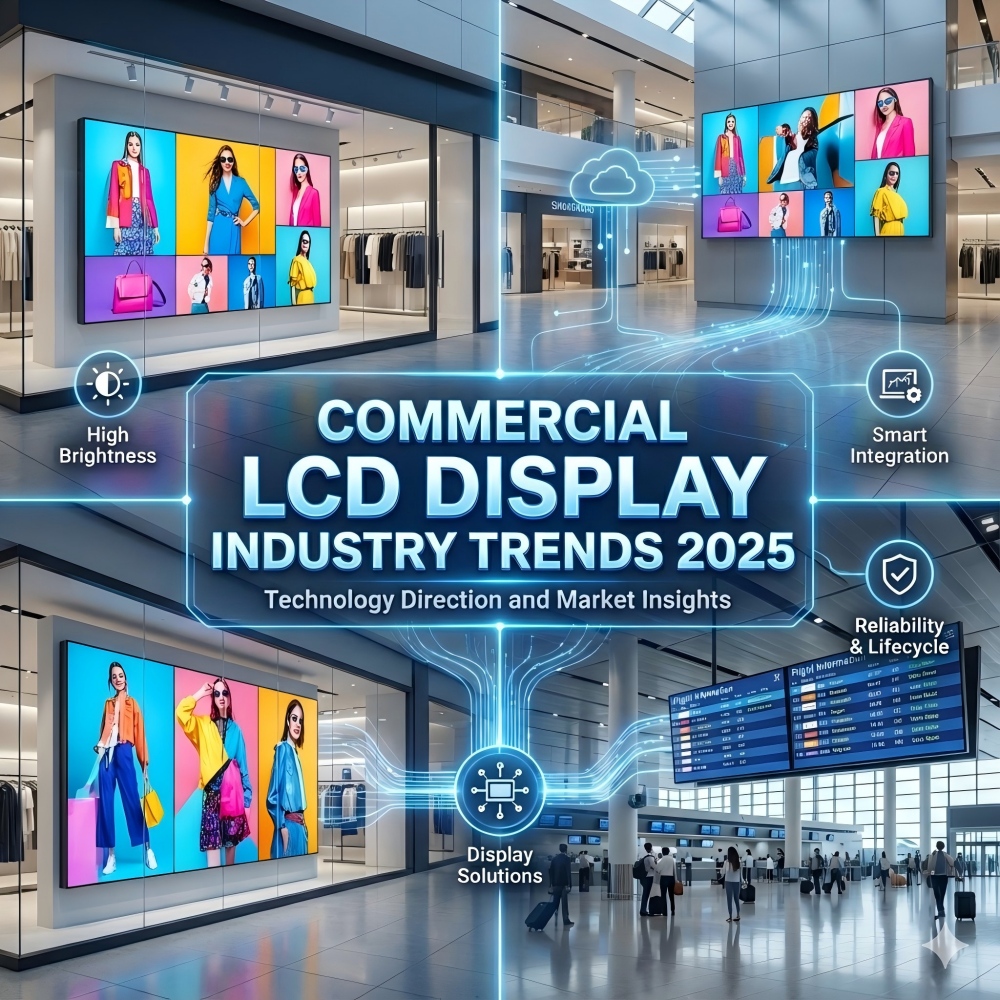 2025-12-29Commercial LCD Display Industry Trends and Market Insights for 2026
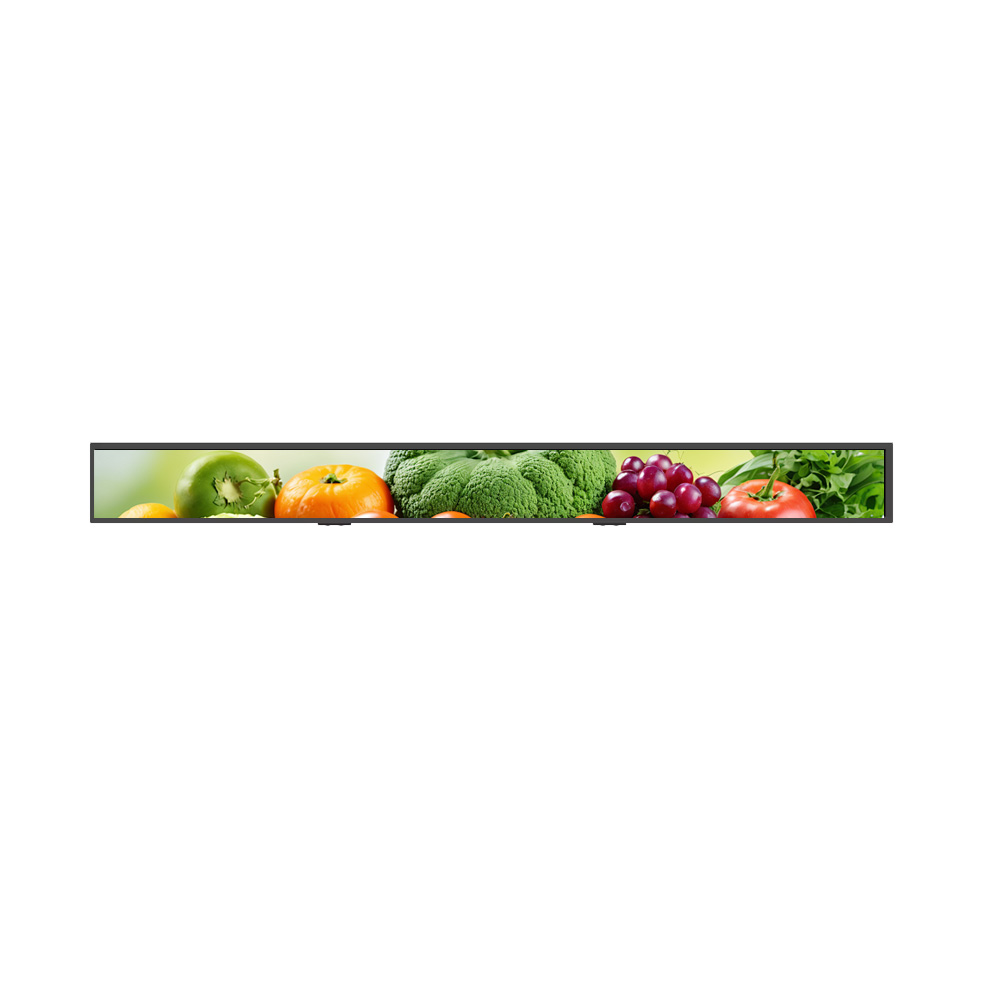 2025-12-23Why Custom Commercial Displays Are Becoming Standard in Modern Systems
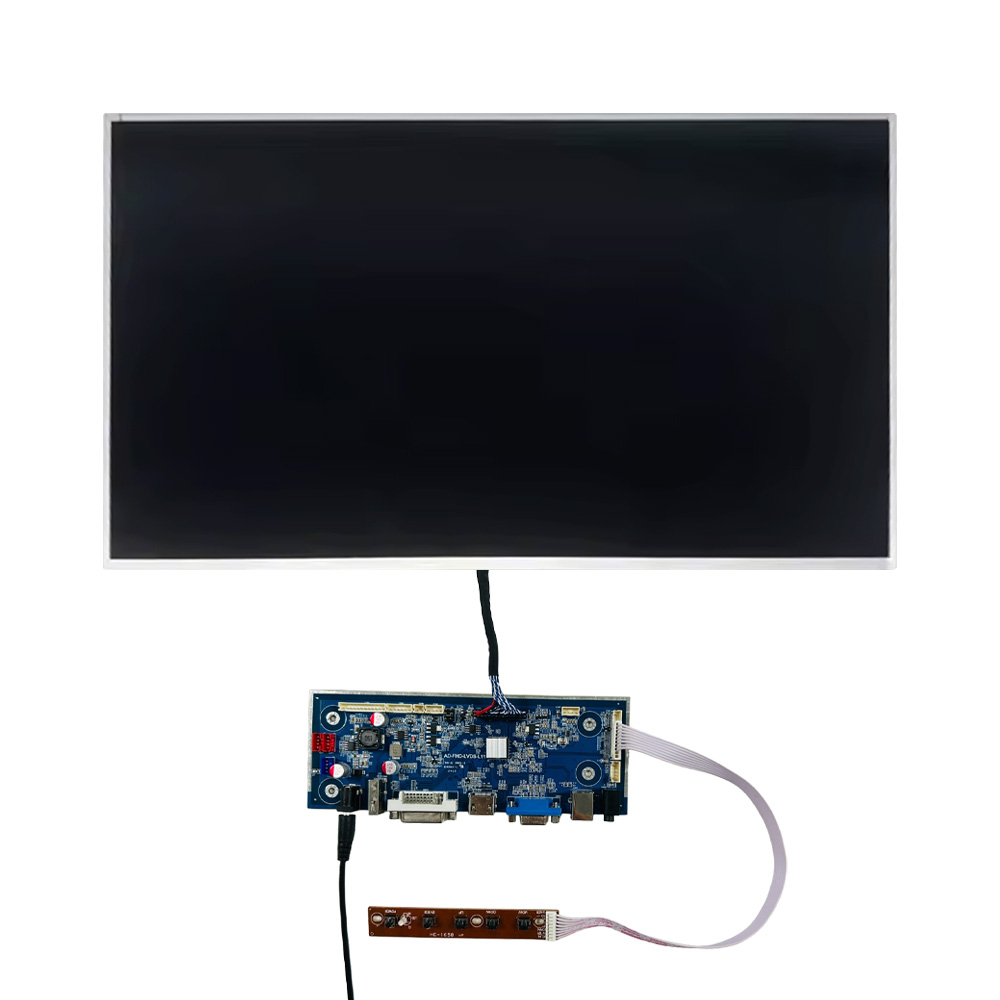 2025-12-17Advancing Outdoor Visual Systems with High-Brightness, Wide-Temperature LCD Technology
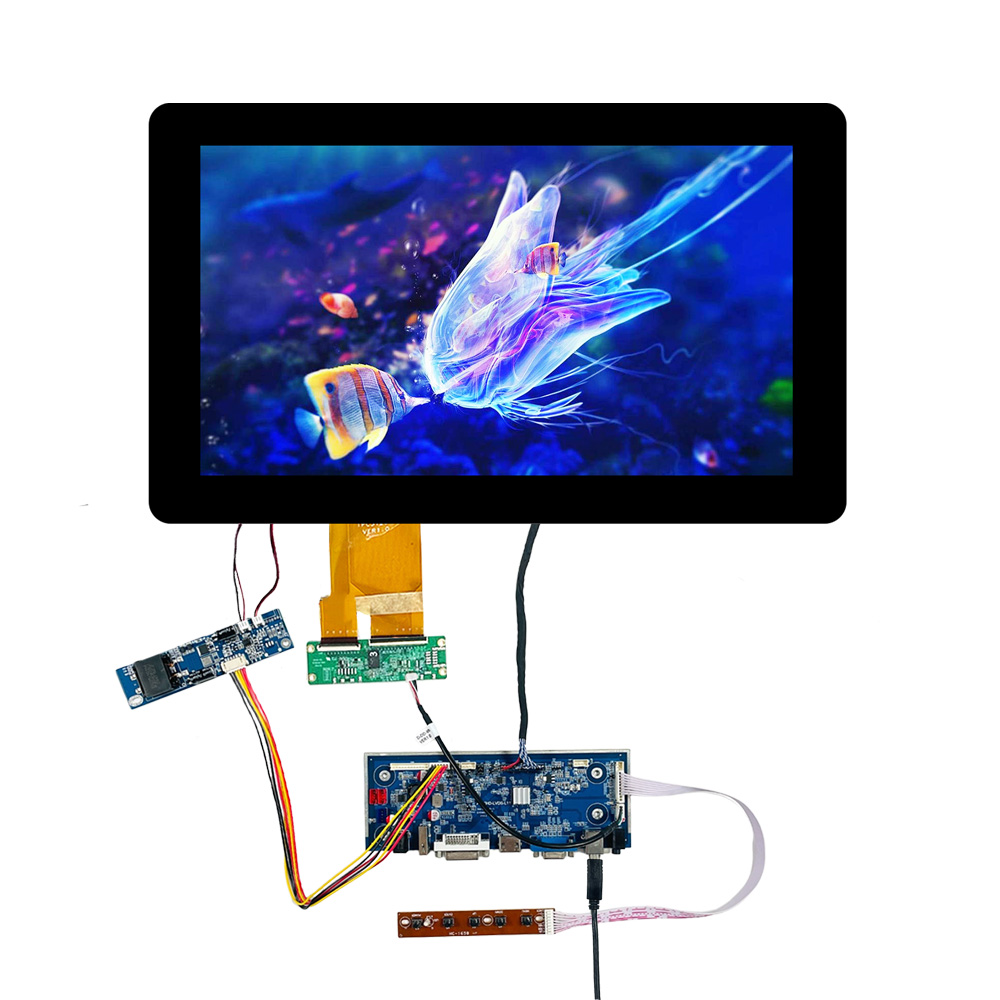 2025-12-10Outdoor Commercial LCD Modules for Wide Temperature High-Brightness Advertising Displays
 2025-12-0215,6-Zoll 4K Medical Display Module für hochpräzise diagnostische Bildgebung


Products
Commercial LCD Display
Gaming LCD Module
High Resolution Medical Display
Outdoor Display
E-ink LCD Display
Desk VR Monitor
OLED Display
Total Solutions
Service
Custom Touch Screen Solutions
Customized Frames & Protective Cover Glass
LCD Driver Board & Accessory Customization
Contact us
Contact Us
Copyright © 2025 Shenzhen Aptus Technology Co.,Ltd All Rights Reserved.

-
Inquire
- Top