Professional commercial display solution provider

- Home
-
Products
Professional commercial display solutions
-
About us
In good faith to customers
-
Service
Provide professional and meaningful advice
-
Knowledge Center
Innovation for development
- Contact us
16 inch 3840x2400 EDP 40PIN OLED Display Back to list
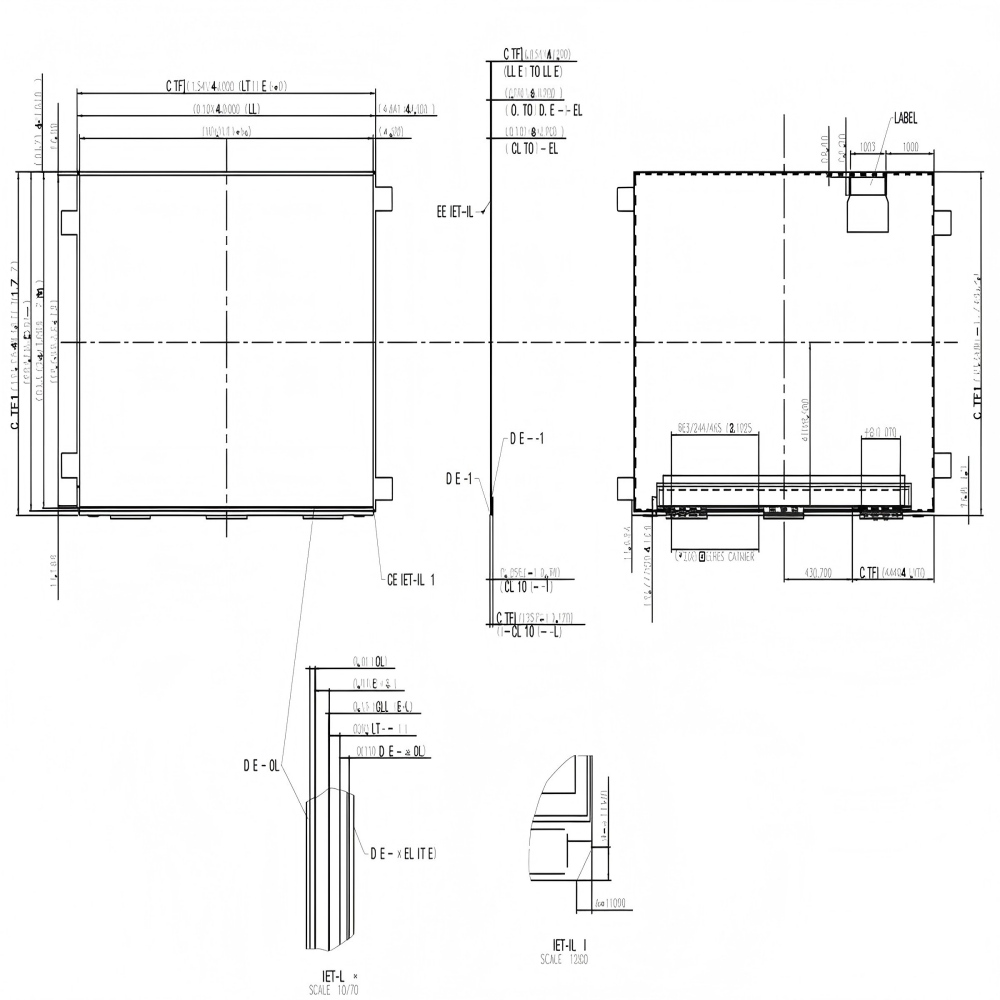


Description:
►Model:ATNA60YV09 ►Size:16 inch ►Resolution:3840x2400 dots ►Active Area:344.448x215.28mm ►Outline Dimension:348.58×223.01×3.242mm ►View Direction:85/85/85/85 ►Interface:EDP 40PIN ►Brightness:400cd/m² 16.0-inch WQUXGA OLED display module with 3840×2400 resolution, 16:10 aspect ratio, 400 nits brightness, and wide DCI-P3 color gamut. Ideal for premium notebooks, portable workstations, and high-resolution computing devices, providing fast 1 ms response and high contrast for professional applications.
Inquire16.0" WQUXGA OLED Display Module Overview
This 16.0-inch WQUXGA OLED display module is a high-resolution organic light-emitting diode solution designed for premium notebook PCs and advanced portable computing systems. With a native resolution of 3840 × 2400 pixels, the display provides excellent image clarity, precise text rendering, and expanded vertical workspace compared with conventional 16:9 panels.
The display is built on LTPS TFT active matrix OLED technology, enabling self-emissive pixel operation without the need for a traditional backlight. This structure allows the display to achieve true black levels, ultra-high contrast, fast response speed, and stable viewing performance. These characteristics make the module suitable for professional laptops, creative workstations, and other high-end portable devices where visual accuracy and reliability are essential.
Key Specifications
| Item | Specification |
|---|---|
| Display Size | 16.0 inch |
| Display Type | OLED |
| TFT Technology | LTPS TFT Active Matrix |
| Resolution | 3840 × 2400 (WQUXGA) |
| Display Colors | 1074M (RGB 8bit + 2FRC) |
| Pixel Pitch | 89.7 × 89.7 µm |
| Brightness (Typical) | 400 cd/m² |
| Contrast Ratio | 100,000 : 1 |
| Color Gamut | DCI-P3 up to 100% (Typical) |
| Response Time | 1 ms (Typical) |
| Viewing Angle | Over 85° (All directions) |
| Interface | eDP |
| Active Area | 344.448 × 215.280 mm |
| Module Dimensions | 348.58 × 223.01 × 3.242 mm |
| Weight | Approx. 250 g |
| Operating Temperature | -20°C to +70°C |
| Storage Temperature | -40°C to +85°C |
| Surface Treatment | Glare |
| Environmental Compliance | Pb-Free, Halogen-Free |
OLED Visual Performance Characteristics
This OLED display module delivers consistent and stable visual performance under standard operating conditions. The high pixel density ensures smooth edges, sharp typography, and detailed image reproduction, even for complex user interfaces and high-resolution visual content.
Thanks to the self-emissive nature of OLED technology, each pixel can be independently controlled. This allows the display to produce extremely deep blacks and maintain high contrast without backlight leakage. As a result, images appear more vivid and three-dimensional, while darker scenes retain detail and depth.
The fast response characteristics reduce motion blur during scrolling, animation, and video playback, contributing to a smooth and comfortable user experience. Wide viewing angles further ensure that color and brightness remain stable when viewed from different directions.
Electrical Interface and System Compatibility
The module uses an Embedded DisplayPort (eDP) v1.4b interface with a four-lane configuration, supporting high-bandwidth data transmission for WQUXGA resolution at a typical refresh rate of 60 Hz. The eDP interface is widely adopted in modern notebook platforms, making it suitable for a broad range of portable computing designs.
Electrical characteristics and signal timing are aligned with mainstream notebook system architectures. Proper power-on and power-off sequencing is required to ensure stable operation and long-term reliability. When integrated according to specification guidelines, the display maintains consistent optical and electrical performance across its full operating temperature range.
Mechanical Design and Reliability Considerations
With a slim profile of approximately 3.24 mm, this OLED display module supports thin and lightweight notebook designs. Despite its slim construction, the panel is engineered to meet reliability requirements through extensive evaluation.
The module has undergone multiple reliability tests, including high- and low-temperature exposure, humidity testing, vibration testing, electrostatic discharge evaluation, and long-term image sticking assessment. These tests help ensure stable performance during extended use in real-world environments.
Due to the thin glass structure of OLED panels, careful handling and appropriate mechanical mounting are recommended during system integration.
Typical Application Scenarios
-
Notebook PC
-
Tablet PC
-
High-resolution mobile workstations
-
Commercial and industrial portable terminals
For applications beyond standard notebook usage, system-level verification is recommended.
Contact for Technical Inquiry and Project Evaluation
For system integration projects, technical questions, or long-term supply evaluation, customers are welcome to contact our team to discuss display compatibility, interface requirements, and application conditions.
Our engineers can assist with early-stage evaluation, including resolution matching, interface verification, mechanical fit considerations, and operating environment assessment. This support helps reduce development risk and ensures stable performance before mass production.
If you are developing a notebook, portable workstation, or other high-resolution display product, please share your project details so an appropriate display solution and support plan can be evaluated.
Contact us to discuss your project requirements or request technical documentation.
About Duobond Display
Duobond Display is a professional supplier of OLED and LCD display solutions, serving industrial, commercial, and embedded display markets worldwide. The company focuses on providing stable, application-oriented display products rather than short-term, model-driven components.
By leveraging extensive experience in display technologies, interface standards, and global supply-chain coordination, Duobond Display supports customers throughout the entire product lifecycle—from early-stage evaluation and system integration to mass production and long-term supply management.
The company’s product portfolio includes TFT LCDs, monochrome displays, bar-type displays, and high-resolution OLED modules. This broad technical coverage enables Duobond Display to recommend suitable display solutions based on performance requirements, mechanical constraints, and target market expectations.
Our Display Services
Duobond Display offers a comprehensive range of services to support display integration and long-term project stability:
-
OLED and LCD module sourcing and evaluation
-
Display technology consultation and selection support
-
Interface compatibility and power design assistance
-
Mechanical integration guidance
-
Quality inspection coordination and documentation support
-
Long-term supply planning and lifecycle management
Through structured technical communication and supply coordination, Duobond Display helps customers focus on their core product development while ensuring consistent and reliable display performance.
Contact Us for Technical Support and Project Inquiry
For technical questions, system compatibility evaluation, or long-term supply discussions, please feel free to contact our team.
Our display engineers can support early-stage project evaluation, including interface compatibility, power requirements, mechanical integration, and operating environment assessment. This helps ensure that the display module meets your system design requirements before mass production.
If you are developing a notebook, portable workstation, or other high-resolution display application, sharing your project details will allow us to provide more accurate technical guidance and solution recommendations.
You may contact us to request technical documentation, integration support, or project evaluation assistance.
Frequently Asked Questions (FAQ)
What interface does this 16.0-inch OLED display module use?
This module uses an eDP v1.4b interface with a four-lane configuration, which is widely used in modern notebook and portable computing platforms.
Is this OLED display suitable for notebook and laptop applications?
Yes. The display is designed primarily for notebook PCs and portable workstations, offering high resolution and stable electrical characteristics.
What advantages does OLED offer compared to LCD?
OLED displays provide self-emissive pixels, enabling true black levels, ultra-high contrast, fast response time, and wide viewing angles without a backlight.
Does this display support wide color gamut applications?
Yes. The display supports a DCI-P3 wide color gamut (typical), making it suitable for color-sensitive applications such as content creation and multimedia use.
What is the operating temperature range of this module?
The module supports an operating temperature range of -20°C to +70°C, with storage temperatures from -40°C to +85°C.
Can this display be used for non-notebook applications?
While optimized for notebook systems, the display may be evaluated for other applications. System-level verification is recommended for non-standard use cases.
Is technical support and long-term supply available?
Yes. Technical evaluation, integration support, and long-term supply planning are available throughout the product lifecycle.
How can I request technical documents or project support?
You can contact the supplier to request technical documentation or project evaluation support by sharing your application details.
Contact Us for LCD Module Inquiry

Products
Commercial LCD Display
Gaming LCD Module
Outdoor Display
MINI-LED LCD Display
High Resolution Medical Display
OLED Display
Total Solutions
E-ink LCD Display
Desk VR Monitor
Service
Custom Touch Screen Solutions
Customized Frames & Protective Cover Glass
LCD Driver Board & Accessory Customization
Contact us
Contact Us
Copyright © 2025 Shenzhen Aptus Technology Co.,Ltd All Rights Reserved.

-
Inquire
- Top