Professional commercial display solution provider

- Home
-
Products
Professional commercial display solutions
-
About us
In good faith to customers
-
Service
Provide professional and meaningful advice
-
Knowledge Center
Innovation for development
- Contact us
What Type of LCD Display Is Recommended for Outdoor Self-Service Terminals?
What Type of LCD Display Is Recommended for Outdoor Self-Service Terminals?
The recommended LCD display for an outdoor self-service terminal is a high-brightness, sunlight-readable, wide-temperature LCD module with suitable optical treatment and optional touch integration. Unlike standard indoor LCD panels, outdoor self-service terminals must remain readable in direct sunlight while operating reliably through temperature changes, humidity, dust, and long periods of continuous use.
For most outdoor kiosk and self-service applications, a display with approximately 1000 nits or higher brightness is a practical starting point. Terminals exposed to strong, direct sunlight may require 1500 nits or more, depending on the installation environment and optical design. Duobond Display's outdoor LCD range includes 1000-nit, 1500-nit and higher-brightness configurations, together with wide-temperature options for demanding environments.
The display should not be selected based on brightness alone. A reliable outdoor self-service terminal requires a combination of high brightness, wide operating temperature, anti-glare or anti-reflective treatment, wide viewing angle, mechanical protection, touch compatibility, and appropriate enclosure design.
Why Standard Indoor LCD Displays Are Usually Not Suitable
A conventional indoor LCD display is generally designed for controlled lighting and temperature conditions.
Outdoor self-service terminals face a very different operating environment. The display may be installed at a parking area, transportation station, outdoor shopping area, EV charging location, public facility, or other exposed location.
The display can encounter:
-
Direct sunlight
-
High ambient temperature
-
Low temperatures
-
Rapid temperature changes
-
Rain and humidity
-
Dust
-
Reflections from the protective glass
-
Continuous operating hours
-
Frequent user interaction
A conventional 250–400 nit LCD may look acceptable inside a building but become difficult to read in direct sunlight.
Duobond's outdoor-display guidance notes that standard LCD brightness is generally insufficient for strong outdoor lighting, while sunlight-readable applications commonly require substantially higher brightness.
This is why an application-specific Outdoor Display is generally a better starting point for outdoor self-service terminal development.
What Brightness Should an Outdoor Self-Service LCD Have?
Brightness is one of the most important specifications.
A practical selection range can be considered as follows:
| Installation Environment | Suggested Brightness |
|---|---|
| Semi-outdoor or shaded location | 700–1000 nits |
| Outdoor with moderate sunlight | 1000–1500 nits |
| Direct sunlight exposure | 1500–2500+ nits |
| Extremely bright installation | 2500 nits or higher may be considered |
These values are engineering guidelines rather than universal requirements. The final brightness depends on the protective glass, AG/AR treatment, viewing angle, cabinet design, and actual sunlight conditions.
For example, Duobond currently offers a 15.6-inch outdoor LCD module with 1000 nits brightness and a -40°C to +85°C operating temperature range.
For a larger terminal, the 32-inch DBT320BHN51L150A provides 1500 cd/m² brightness and a -30°C to +80°C operating temperature range.
This illustrates why the correct brightness level should be selected according to the actual installation environment rather than simply choosing the brightest available panel.
Why Is Wide-Temperature Operation Important?
An outdoor self-service terminal can experience substantial temperature changes during its service life.
A terminal installed outdoors may need to start and operate during cold mornings, hot afternoons, and periods of high solar heating.
For this reason, a wide-temperature LCD is strongly recommended.
Typical requirements may include:
-
-20°C to +60°C
-
-30°C to +80°C
-
-40°C to +85°C
The required range should be based on the terminal's actual geographical location and enclosure temperature.
For example, Duobond offers a 15.6-inch 1920 × 1080 LCD module rated for -40°C to +85°C, while its 32-inch high-brightness model supports -30°C to +80°C.
Wide-temperature capability is particularly important because high-brightness backlights generate additional heat. The internal temperature of a sealed outdoor terminal can also become significantly higher than the surrounding air temperature.
Therefore, the LCD's operating temperature specification should be evaluated together with the enclosure's thermal design.
Should an Outdoor Self-Service Terminal Use an IPS LCD?
In most interactive outdoor applications, an IPS-type LCD is a strong choice because users may approach the terminal from different directions.
A wide viewing angle helps maintain consistent image visibility when the user is not directly centered in front of the display.
This is particularly useful for:
-
Ticketing terminals
-
Parking payment machines
-
EV charging terminals
-
Information kiosks
-
Outdoor ordering terminals
-
Public service kiosks
-
Transportation terminals
Duobond outdoor LCD products include wide-viewing-angle configurations. For example, the 18.5-inch DV185FHM-R00 specifies 89° viewing angles in four directions.
However, viewing angle should not be evaluated separately from contrast, brightness, and optical treatment. A wide viewing angle is valuable only if the image remains sufficiently clear under the actual lighting conditions.
What Resolution Is Suitable?
For many outdoor self-service terminals, 1920 × 1080 Full HD is sufficient.
Full HD provides enough resolution for:
-
Text
-
Buttons
-
Maps
-
Payment interfaces
-
QR codes
-
Product information
-
Navigation interfaces
-
Video content
For larger displays or applications requiring more detailed graphical content, 2560 × 1440 or 3840 × 2160 may be more appropriate.
Duobond's outdoor LCD portfolio includes Full HD modules as well as larger 4K configurations. For example, the company's outdoor range includes 27-inch and 55-inch 4K modules designed for high-brightness outdoor applications.
For a self-service terminal, however, higher resolution should not automatically be considered better. The display resolution should be matched with the screen size, viewing distance, graphics hardware, interface bandwidth, and system cost.
Is an Anti-Glare Surface Necessary?
For outdoor self-service terminals, some form of optical treatment is highly recommended.
Direct sunlight can reflect from the front surface of the display and reduce perceived contrast. Even a high-brightness LCD can become difficult to read if the optical stack produces excessive reflection.
Anti-glare (AG) treatment can diffuse reflected light, while anti-reflective (AR) treatment can reduce surface reflection.
The appropriate choice depends on the terminal's location and front-cover design.
Duobond outdoor LCD products include anti-glare configurations. For example, the 32-inch DBT320BHN51L150A uses an anti-glare surface with 3H hardness.
For a touch terminal, the optical treatment also needs to be compatible with the touch panel and protective cover glass.
Should the LCD Be Combined With a Touch Panel?
Yes, if the self-service terminal requires user interaction.
The display can be integrated with a projected capacitive touch panel, commonly referred to as a PCAP or CTP touch panel.
A typical structure may include:
LCD module → touch panel → optical bonding → protective cover glass
The exact stack-up depends on the terminal's mechanical design.
When selecting a touch-enabled outdoor LCD, manufacturers should evaluate:
-
Touch sensitivity
-
Cover-glass thickness
-
Touch-controller compatibility
-
Glove operation
-
Water interference
-
Optical transmission
-
Surface treatment
-
Mechanical strength
-
Operating temperature
Duobond's outdoor LCD solutions can be supplied with optional CTP touch panels, AD boards, Android boards, and cable sets. This can reduce the amount of integration work required by the equipment manufacturer.
Does Optical Bonding Improve Outdoor Performance?
Optical bonding is worth considering for outdoor self-service terminals, particularly when sunlight readability and mechanical integration are important.
An air gap between the LCD and front glass can produce additional internal reflections. Optical bonding fills this gap with an optical adhesive, helping reduce internal reflection and improve perceived image clarity.
It can also create a more integrated display assembly.
For terminals that are exposed to sunlight and frequent public interaction, optical bonding can be evaluated together with:
-
High-brightness backlight
-
Anti-glare treatment
-
Anti-reflective treatment
-
Protective cover glass
-
Touch panel
This combination is generally more effective than increasing LCD brightness alone.
What Kind of Protective Glass Should Be Used?
A protective cover glass is recommended when the LCD is installed directly behind a public-facing terminal surface.
The glass protects the display from:
-
Scratches
-
Accidental impact
-
Repeated contact
-
Cleaning
-
External contamination
The glass thickness and mechanical strength should be selected according to the terminal's expected use.
For touch terminals, the cover glass also becomes part of the touch stack, so excessive thickness or unsuitable optical materials may affect touch performance and image quality.
The cover glass should therefore be specified together with the LCD and touch panel instead of being selected as a separate component at the end of the project.
How Important Is Weather Protection?
A high-brightness LCD alone does not make a complete outdoor display.
The entire display assembly must be protected against environmental exposure.
The terminal enclosure should address:
-
Rain
-
Moisture
-
Dust
-
Condensation
-
UV exposure
-
Heat
-
Cable-entry points
-
Front-panel sealing
-
Ventilation
Duobond describes its outdoor display range as being designed for protection against dust, moisture, and heat, with weather-resistant construction intended for continuous outdoor operation.
The final IP protection level should be determined for the complete terminal rather than assuming that the LCD module itself automatically provides the same protection level as the finished enclosure.
What LCD Size Is Appropriate for a Self-Service Terminal?
The appropriate size depends on the interface, user distance, cabinet dimensions, and amount of information displayed.
Common choices include:
15.6-inch
Suitable for compact terminals where space is limited.
Duobond offers a 15.6-inch Full HD outdoor LCD with 1000 nits brightness and a -40°C to +85°C operating temperature range.
18.5-inch
A practical size for many interactive kiosks and self-service systems.
The 18.5-inch DV185FHM-R00 provides 1920 × 1080 resolution, 1000 nits brightness, and a -20°C to +60°C operating range.
21.5-inch
Suitable when the interface requires more space for buttons, maps, menus, or detailed information.
Duobond provides 21.5-inch configurations with different brightness and temperature specifications, allowing manufacturers to select according to the actual environment.
32-inch and Larger
Larger displays are appropriate for information kiosks, interactive advertising terminals, wayfinding systems, and applications where users need to view more information from a greater distance.
Duobond's outdoor range includes 32-inch 1500-nit Full HD modules and larger 4K outdoor displays.
What LCD Interface Should Be Selected?
The LCD interface should be compatible with the terminal's main controller or display board.
Common industrial display interfaces include:
-
LVDS
-
eDP
-
V-by-One
For example, Duobond's outdoor portfolio includes 30-pin LVDS, 51-pin LVDS, 30-pin eDP, and 51-pin V-by-One configurations depending on the display size and resolution.
The interface should be confirmed early in the project because it affects:
-
Controller-board selection
-
Cable design
-
Signal bandwidth
-
Connector location
-
PCB architecture
-
System integration
A display with the correct resolution but an incompatible interface can create unnecessary redesign work.
Recommended LCD Configuration for an Outdoor Self-Service Terminal
For a typical interactive outdoor self-service terminal, a practical starting specification would be:
| Parameter | Recommended Configuration |
|---|---|
| Display Type | High-brightness outdoor TFT-LCD |
| Brightness | 1000–1500 nits or higher depending on sunlight |
| Resolution | 1920 × 1080 for most terminals |
| Panel Type | IPS or wide-viewing-angle LCD |
| Operating Temperature | At least -20°C to +60°C; wider for harsh climates |
| Surface Treatment | Anti-glare and/or anti-reflective |
| Touch | Optional PCAP/CTP touch panel |
| Front Protection | Hardened protective cover glass |
| Optical Structure | Optical bonding recommended where appropriate |
| Interface | LVDS, eDP, or V-by-One according to controller |
| Enclosure | Weather-resistant outdoor housing |
| Thermal Design | Passive or active thermal management as required |
This specification is a starting point rather than a universal standard. The final configuration should be determined from the actual installation environment.
What Are the Most Important Selection Factors?
When selecting an LCD for an outdoor self-service terminal, manufacturers should prioritize the following factors.
Sunlight Readability
The display must remain readable under the strongest expected ambient light.
Wide Temperature
The operating range should cover both the lowest and highest expected internal temperatures.
Optical Performance
Brightness, AG/AR treatment, contrast, and protective glass should be evaluated as one optical system.
Touch Compatibility
If the terminal is interactive, the LCD, touch panel, cover glass, and bonding structure should be designed together.
Mechanical Reliability
The display should be properly supported and protected from accidental contact and impact.
Thermal Management
High-brightness backlights and enclosed cabinets can generate significant heat.
Interface Compatibility
The LCD interface must match the controller and system architecture.
Long-Term Availability
For commercial equipment, manufacturers should also consider product lifecycle, sample availability, customization capability, and long-term supply.
Why Choose a Dedicated Outdoor LCD Instead of Modifying an Indoor Display?
Using an indoor LCD and attempting to increase its brightness or add an external protective layer may appear less expensive initially.
However, this approach can create engineering problems involving:
-
Insufficient sunlight readability
-
Limited temperature range
-
Excessive internal heat
-
Optical reflection
-
Backlight reliability
-
Touch integration
-
Mechanical protection
-
Long-term outdoor stability
A dedicated outdoor LCD is designed around these requirements from the beginning.
Duobond's outdoor LCD portfolio is specifically positioned for applications such as kiosks, outdoor advertising, transportation systems, and smart-city equipment, with high-brightness and wide-temperature configurations available across multiple sizes.
FAQ
What type of LCD is best for an outdoor self-service terminal?
A high-brightness, sunlight-readable TFT-LCD with wide-temperature operation is generally recommended. For interactive terminals, a PCAP touch panel, protective cover glass, and suitable optical treatment should also be considered.
Is 1000 nits enough for an outdoor kiosk?
1000 nits can be suitable for many outdoor applications, especially where the display is partially shaded. Direct sunlight may require 1500 nits or higher. The complete optical stack and installation angle should also be evaluated.
Should an outdoor self-service LCD be 4K?
Not necessarily. Full HD 1920 × 1080 is sufficient for many self-service terminals. 4K becomes more useful for larger displays, longer viewing distances, or applications requiring highly detailed graphics.
What temperature range should an outdoor LCD support?
The required range depends on the installation environment. A minimum of -20°C to +60°C may be adequate for some locations, while harsh environments may require -30°C to +80°C or -40°C to +85°C. Duobond offers outdoor LCD configurations covering these wider ranges.
Can an outdoor LCD support touch?
Yes. Outdoor LCD modules can be integrated with PCAP/CTP touch panels, protective cover glass, and controller boards. Duobond provides optional touch and turnkey integration for selected outdoor LCD modules.
Is anti-glare treatment necessary?
It is strongly recommended for displays exposed to sunlight. AG or AR treatment can reduce reflections and improve practical readability.
What size LCD is suitable for a self-service kiosk?
15.6, 18.5, and 21.5 inches are practical choices for many compact and medium-sized self-service terminals, while 32 inches or larger can be appropriate for information-rich kiosks and applications viewed from a greater distance.
Conclusion
The most suitable LCD for an outdoor self-service terminal is generally a high-brightness, sunlight-readable, wide-temperature TFT-LCD designed for outdoor operation. Brightness alone is not enough. The display should also provide suitable viewing angles, optical treatment, thermal performance, mechanical protection, and interface compatibility.
For interactive terminals, the recommended configuration can include a PCAP touch panel, protective cover glass, optical bonding, anti-glare or anti-reflective treatment, and a weather-resistant enclosure.
The final display specification should be selected according to the terminal's installation environment, viewing distance, sunlight exposure, temperature range, screen size, touch requirements, and controller architecture.
Duobond Display offers Outdoor Display solutions in multiple sizes and configurations, including high-brightness modules from 1000 nits to 1500 nits and beyond, wide-temperature models, touch integration options, and controller-board solutions. This allows OEM and ODM manufacturers to develop outdoor self-service terminals around a display configuration matched to their actual operating conditions.
Recommended reading
 2026-06-30What is High Haze Anti-Glare Glass for Advertising Displays?
 2026-06-30Optimizing Display Legibility for Outdoor EV Charging Infrastructure: A Technical Guide to Sunlight-Readable LCD Design
 2026-06-29How Curved LCD Displays Ensure 24/7 Reliability in High-Traffic Gaming Environments
 2026-06-23How Many Nits of Brightness Are Required for an EV Charging Station Display to Be Sunlight-Readable?
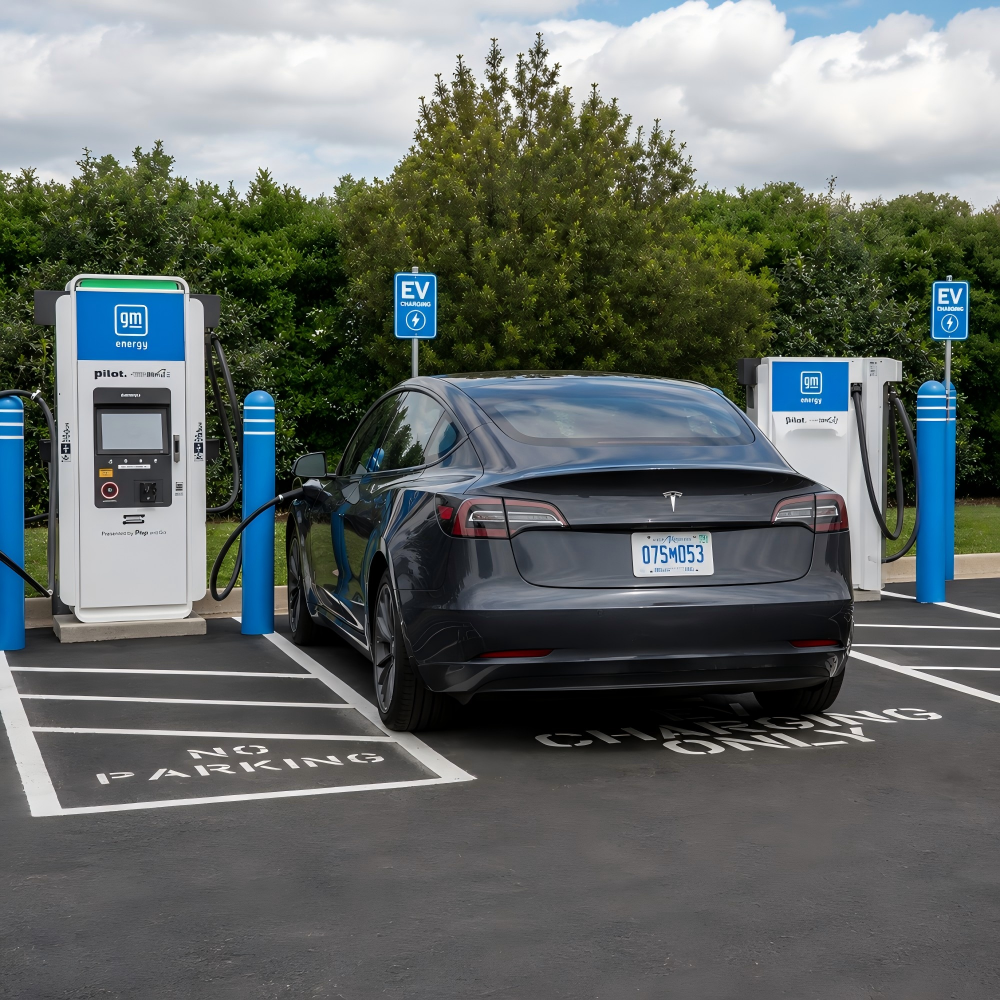 2026-06-23What Touch Technology Is Best for EV Charging Station LCD Displays?
Products
Commercial LCD Display
Gaming LCD Module
Outdoor Display
MINI-LED LCD Display
High Resolution Medical Display
OLED Display
Total Solutions
E-ink LCD Display
Desk VR Monitor
Service
Custom Touch Screen Solutions
Customized Frames & Protective Cover Glass
LCD Driver Board & Accessory Customization
Contact us
Contact Us
Copyright © 2025 Shenzhen Aptus Technology Co.,Ltd All Rights Reserved.

-
Inquire
- Top