Professional commercial display solution provider

- Home
-
Products
Professional commercial display solutions
-
About us
In good faith to customers
-
Service
Provide professional and meaningful advice
-
Knowledge Center
Innovation for development
- Contact us
What are the key specifications to consider when customizing LCD displays for 24/7 digital signage?
What are the key specifications to consider when customizing LCD displays for 24/7 digital signage?
Deploying digital signage that operates continuously—24 hours a day, 7 days a week, 365 days a year—demands hardware engineered far beyond standard consumer-grade screens. When customizing an LCD display for continuous-use environments, engineers, product designers, and system integrators must evaluate a precise matrix of electrical, optical, thermal, and mechanical specifications. Failure to optimize these parameters leads to premature panel degradation, image burn-in, overheating, and a high total cost of ownership (TCO). This comprehensive technical guide details the critical engineering specifications required to design and deploy high-performance, ultra-reliable custom LCD displays for relentless commercial operation.
1. Panel Grade and Liquid Crystal Architecture
The foundation of any 24/7 display is the liquid crystal panel itself. Consumer panels are engineered for an average usage profile of 6 to 8 hours per day. When subjected to continuous operation, the liquid crystals, color filters, and alignment layers experience severe thermal and electrical stress, leading to rapid contrast loss, color shifting, and structural fatigue.
Commercial vs. Consumer Grade Panels
Custom 24/7 displays must utilize strictly industrial or commercial-grade panels (often referred to as Public Display or PID panels). These panels feature specialized liquid crystal formulations with significantly higher clearing points—the temperature at which the liquid crystal loses its anisotropic properties and turns into an isotropic liquid, causing the screen to develop black patches. Commercial panels typically feature a clearing point exceeding 110°C, whereas consumer panels may fail at 65°C to 75°C.
TFT Technology Selection
-
IPS (In-Plane Switching) / FFS (Fringe Field Switching): Widely preferred for digital signage due to true 178-degree horizontal and vertical viewing angles. IPS technology prevents color washout and shifting when viewed from acute angles, which is critical for retail displays and public information kiosks. Furthermore, IPS panels exhibit superior resistance to temporary blacking under direct sunlight or high thermal loads.
-
VA (Vertical Alignment): Offers significantly higher native contrast ratios (often 3000:1 to 5000:1 compared to IPS’s 1000:1), yielding deep blacks and high visual punch. However, VA panels suffer from gamma shifting at wide viewing angles and are historically more susceptible to temporary isotropic blackening if thermal management is suboptimal.
2. Backlight Engineering, Luminance, and Lifespan
The LED backlight unit (BLU) is the primary component responsible for both power consumption and heat generation within an LCD module. For 24/7 deployment, the BLU must be over-engineered to maintain consistent luminance over years of continuous service.
Luminance (Brightness) Levels
The required nit level depends entirely on the deployment environment:
| Environment | Luminance Range (Nits / cd/m2) | Key Technical Consideration |
| Standard Indoor Retail | 350 – 500 nits | Focus on power efficiency and color accuracy. |
| Bright Indoor / Window-Facing | 700 – 1,500 nits | Requires robust heat dissipation due to increased BLU driving current. |
| Full Outdoor Signage | 2,000 – 3,500+ nits | Must combat direct solar radiation; mandatory integration with specialized outdoor display technologies to ensure sunlight readability. |
LED Lifespan (MTBF)
Standard displays often feature a backlight lifespan of 20,000 to 30,000 hours. For a 24/7 application, this translates to less than 3.5 years of operation. Custom commercial displays must specify a minimum backlight lifespan of 50,000 hours, with high-end industrial configurations reaching 70,000 to 100,000 hours.
Constant Current Driving and PWM Dimming
The LED driver circuit must utilize high-efficiency constant current regulation rather than constant voltage to prevent thermal runaway in the LEDs. Pulse Width Modulation (PWM) dimming frequencies should be engineered above 20 kHz to eliminate visual flicker, minimize eye strain for viewers, and prevent rolling black bars when captured by security cameras or smartphone video recording.
3. Mitigation of Static Image Retention (Burn-In)
Digital signage frequently displays static user interfaces, news tickers, corporate logos, or localized timetables. Continuous excitation of the same liquid crystal cells over 24/7 operation can cause "image sticking" or permanent burn-in due to charge accumulation within the dielectric layers of the TFT matrix.
Hardware-Level Mitigations
-
Anti-Image Sticking (AIS) Driver ICs: Custom driver firmware can implement pixel-shifting algorithms at the hardware level. By imperceptibly shifting the entire frame by a few pixels every few minutes, the electrical load is distributed across adjacent sub-pixels, preventing charge buildup without disrupting the viewer's experience.
-
Negative Voltage Driving: Advanced timing controllers (T-Cons) apply periodic reverse-bias voltages during blanking intervals to neutralize residual charges on the storage capacitors of the liquid crystal cells.
4. Advanced Thermal Management and Structural Integrity
Heat is the ultimate enemy of 24/7 electronics. Prolonged exposure to high operating temperatures accelerates the degradation of LED phosphors, reduces driver efficiency, and can cause structural warping of the optical films (diffusers, polarizers) inside the panel.
Thermal Dissipation Design
Consumer displays rely heavily on plastic chassis that trap heat. Custom 24/7 LCDs must use a rugged metal enclosure—typically constructed from high-thermal-conductivity aluminum or galvanized steel (SECC). The rear chassis should act as a massive passive heat sink, directly contacting the LED backlight bar via high-performance thermal interface materials (TIM) with a thermal conductivity of at least 3.0 W/m·K.
[Ambient Air][Metal Chassis / Heat Sink][LED Backlight Bar] <--- [LCD Cell]
Active vs. Passive Cooling
For indoor applications under 1000 nits, passive convection cooling is preferred to eliminate fan noise and prevent the ingress of airborne dust. For high-brightness indoor window or heavy-duty industrial installations, an active intelligent cooling system using pulse-controlled, low-noise ball-bearing fans is required. The system must include integrated thermal sensors linked to an internal microcontroller that dynamically adjusts fan speed or scales down backlight luminance if internal temperatures exceed safety thresholds.
5. Optical Enhancements and Surface Treatments
The viewability of digital signage depends heavily on how the display interacts with ambient light. Reflections can render content completely unreadable, destroying the effectiveness of the signage.
Anti-Glare (AG) vs. Anti-Reflection (AR) Coatings
-
Anti-Glare (AG): A chemical etching or spray treatment on the top glass layer that diffuses specular reflections into a soft blur. AG is ideal for indoor environments with overhead fluorescent lighting. Standard gloss values for commercial displays range from 25% to 44% haze.
-
Anti-Reflection (AR): A multi-layer thin-film vacuum deposition coating that utilizes destructive light interference to cancel out up to 99% of incoming ambient light reflections. AR coatings maintain superior contrast ratios and color vibrancy compared to AG, making them highly suitable for high-end retail and controlled outdoor environments.
Optical Bonding Technology
For demanding commercial environments, the air gap between the outer cover glass (or touch screen) and the LCD cell should be eliminated via Optical Bonding. Utilizing liquid Optically Clear Adhesive (LOCA) or solid gel sheets (OCA), optical bonding matches the refractive index of the glass and the LCD polarizer. This yields substantial benefits:
-
Eliminates Internal Reflection: Increases contrast by up to 400% in high ambient light environments by removing the internal glass-air-polarizer boundaries.
-
Prevents Moisture and Condensation: Eliminates the risk of fogging within the display layers when exposed to fluctuating diurnal temperatures.
-
Enhances Structural Shock Resistance: Acts as an impact absorber, heavily improving the durability of the screen against vandalism or accidental impacts in public spaces.
6. Electrical Robustness, Component Selection, and Control
A 24/7 display requires an internal power supply unit (PSU) and scalar board capable of enduring uninterrupted voltage fluctuations and thermal cycling over many years.
Industrial Capacitors and Power Supply
The PSU must be specified with 105°C-rated solid aluminum electrolytic or ceramic capacitors, avoiding cheap 85°C-rated components that quickly dry out and cause power rail failure. The power supply should operate comfortably at a 30% derating margin—meaning if the system draws 70W at peak brightness, the PSU should be rated for at least 100W to minimize component stress.
Failover and Redundancy Systems
For mission-critical digital signage (such as airport flight information displays, transport hubs, or public safety infrastructure), the custom scalar board must support hardware-level signal failover. If the primary input source (e.g., HD-MI 1) drops out due to a media player crash or cable disconnection, the scalar board must automatically switch to a secondary source (e.g., DisplayPort or an internal micro-SD loop player) within milliseconds to prevent a blank or error-state screen.
Remote Management and Telemetry (RS232 / LAN)
Deploying maintenance personnel to physically service screens is logistically expensive. Custom 24/7 LCDs must integrate comprehensive remote management capabilities via RS232 or RJ45 LAN interfaces supporting industry-standard protocols. Network administrators must be able to remotely query real-time diagnostic data, including internal module temperature, operating hours, backlight status, and current input resolution, as well as execute remote power cycling and firmware updates.
Conclusion
Customizing an LCD display for reliable 24/7 operation is a precise engineering balancing act involving panel selection, optical treatments, thermal dissipation, and electrical redundancy. By specifying a true industrial-grade IPS panel with high clearing points, ensuring a backlight system rated for 50,000+ hours with constant-current drivers, utilizing robust metal enclosures with intelligent thermal scaling, and integrating optical bonding, companies can ensure their digital signage operates continuously without failure. Investing in these heavy-duty technical specifications fundamentally minimizes operational downtime, drastically reduces maintenance field trips, and maximizes long-term return on investment across any commercial or industrial deployment.
Recommended reading
 2026-06-30What is High Haze Anti-Glare Glass for Advertising Displays?
 2026-06-30Optimizing Display Legibility for Outdoor EV Charging Infrastructure: A Technical Guide to Sunlight-Readable LCD Design
 2026-06-29How Curved LCD Displays Ensure 24/7 Reliability in High-Traffic Gaming Environments
 2026-06-23How Many Nits of Brightness Are Required for an EV Charging Station Display to Be Sunlight-Readable?
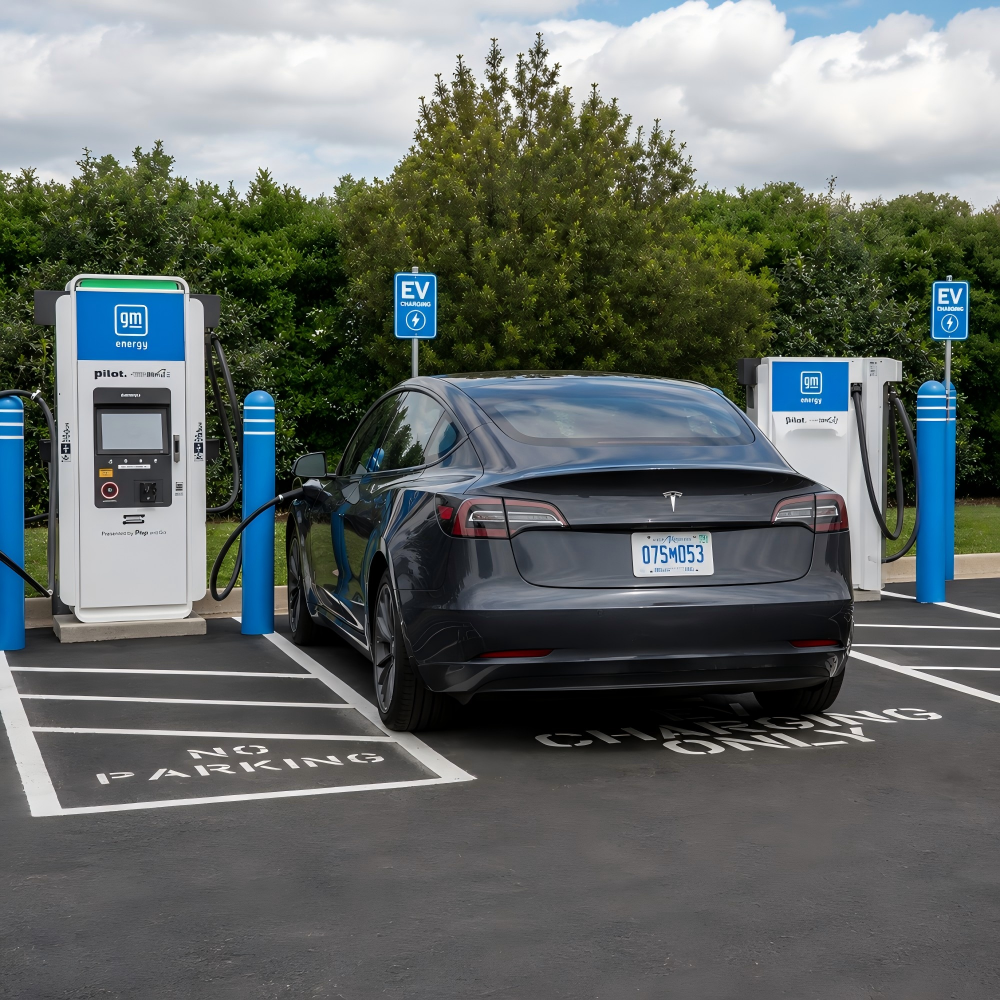 2026-06-23What Touch Technology Is Best for EV Charging Station LCD Displays?
Products
Commercial LCD Display
Gaming LCD Module
Outdoor Display
MINI-LED LCD Display
High Resolution Medical Display
OLED Display
Total Solutions
E-ink LCD Display
Desk VR Monitor
Service
Custom Touch Screen Solutions
Customized Frames & Protective Cover Glass
LCD Driver Board & Accessory Customization
Contact us
Contact Us
Copyright © 2025 Shenzhen Aptus Technology Co.,Ltd All Rights Reserved.

-
Inquire
- Top