Professional commercial display solution provider

- Home
-
Products
Professional commercial display solutions
-
About us
In good faith to customers
-
Service
Provide professional and meaningful advice
-
Knowledge Center
Innovation for development
- Contact us
How to Integrate a Bar LCD into Smart Retail Systems
How to Integrate a Bar LCD into Smart Retail Systems
Integrating non-standard aspect ratio displays, such as Bar LCDs (stretched or shelf-edge displays), into smart retail systems requires solving specific hardware, electrical, and software engineering challenges. Unlike standard 16:9 or 4K monitors, these ultra-wide screens demand specialized configuration to ensure reliable 24/7 operation, seamless power distribution, and distortion-free content rendering.
This technical guide provides an objective, step-by-step framework for system integrators, hardware engineers, and software developers tasked with deploying Bar LCD networks within a smart retail infrastructure.
1. Establishing an Efficient Technical Workflow
Deploying a specialized display sub-system can easily stall a project if internal teams attempt to design the display control architecture from scratch. To optimize development timelines, the integration process should follow a highly structured, collaborative workflow between the system integrator and the display manufacturer.
[System Requirements Definition]
(Dimensions, OS, Environmental Lux, Connectivity)
                  │
                  ▼
[Technical Architecture Design]
(Open-Cell Matching, Backlight Driver Design, AD Board Mapping)
                  │
                  ▼
[3D CAD & Firmware Validation]
(Mechanical Layout, Power Consumption Matrix, EDID Profiles)
                  │
                  ▼
[Functional Prototyping (3-4 Weeks)]
(Physical Sample Assembly, Bench Testing, Initial Validation)
By establishing clear technical parameters early—such as input signaling (HDMI, LVDS, eDP), power limitations, and mechanical boundaries—integrators can leverage pre-engineered display modules. This approach eliminates component mismatching risks and allows internal R&D teams to focus strictly on core retail software, inventory database synchronization, and CMS layers.
Evaluating advanced options, such as an original bar display architecture, allows engineering teams to acquire factory-configured modules where the panel, controller, and signaling interfaces are pre-aligned to industrial standards.
2. Mechanical Integration and Optical Optimization
Retail environments introduce harsh physical variables, including high foot traffic, shopping cart impacts, and intense, multi-directional overhead ambient lighting.
Mechanical Durability and Profile Constraints
Because shelf edges are highly exposed, display modules require robust mechanical integration:
-
Impact Protection: Stretched displays should incorporate a chemically strengthened cover glass (typically 1.1mm to 2.0mm thick) achieving an IK07 or IK08 impact rating to protect the underlying LCD cell.
-
Low-Profile Enclosures: Open-frame or slim-bezel chassis configurations are necessary to ensure the display mounts flush against standard gondola shelving without encroaching on product placement areas or narrow aisle spacing.
Optical Performance under High Lux Conditions
Standard commercial displays often suffer from severe legibility degradation when placed under bright supermarket LED spotlights.
-
Anti-Glare (AG) Chemical Etching: To mitigate specular reflections, the cover glass must feature an AG treatment. This diffuses ambient light reflection, preserving text and image readability from acute viewing angles.
-
Luminance Tuning: For high-ambient indoor environments, the display backlight must deliver a minimum brightness of 400 to 700 nits to maintain high contrast ratios.
3. Power Architecture and Daisy-Chaining Strategy
Deploying dozens of individual display strips across an entire retail aisle creates complex cable management issues. Running separate AC power lines to every single shelf segment is logistically and economically unfeasible.
+-----------------+      Power + Data (Single Cable)      +---------------+
|                 | ────────────────────────────────────> |               |
|  Smart Retail   |      Power + Data (Daisy Chain)       |  Bar LCD #1   |
|   Edge Player   | ────────────────────────────────────> |  (Shelf Edge) |
|                 |                                       +---------------+
+-----------------+                                               │
                                                                  ▼
                                                          +---------------+
                                                          |  Bar LCD #2   |
                                                          |  (Shelf Edge) |
                                                          +---------------+
Low-Voltage Topology
-
USB Type-C (DP Alt Mode): This standard permits a single cable to deliver both the native ultra-wide video signal and DC power directly from a centralized edge player or IoT gateway.
-
Power over Ethernet (PoE): Utilizing PoE (802.3at or 802.3bt) allows low-voltage power and high-speed network communication to run over standard Cat6 cabling, bypassing the need for localized AC electrical outlets.
Hardware Loop-Through (Daisy-Chaining)
To minimize cable runs, the display’s AD controller boards should support DisplayPort (DP) or HDMI Loop-Through. This hardware configuration allows a single media player to output content to a series of 4 to 6 stretched screens arranged in a chain, significantly reducing hardware overhead and installation complexity.
4. Software Integration and Resolution Mapping
The primary software hurdle when integrating Stretched Bar LCDs is handling non-standard pixel dimensions (e.g., $1920 imes 165$, $1920 imes 360$, or $3840 imes 600$). Without specific hardware configurations, common operating systems (Android, Linux, Windows) will crop, distort, or stretch media assets.
EDID Customization
To achieve plug-and-play software compatibility, the display controller's EDID (Extended Display Identification Data) must be custom-programmed at the firmware level. When the host media player connects to the Bar LCD, it instantly reads the exact native, ultra-wide resolution. This ensures pixel-perfect rendering without requiring custom software patches or specialized graphics drivers.
Database and CMS Synchronization
A fully realized smart retail display must connect seamlessly with backend infrastructure:
-
API-Driven Pricing Updates: The local media player should fetch real-time data from the store’s ERP or POS database. When a price changes centrally, an API call triggers an immediate graphical update on the corresponding shelf display segment.
-
Multi-Zone Layouts: Content Management Systems (CMS) should treat the ultra-wide resolution as a split-canvas architecture—allocating specific pixel coordinate zones to automated pricing tags, product specifications, or promotional video loops.
5. Prototyping Timelines and Technical Validation
Moving a smart retail concept from a blueprint to a live in-store pilot requires strict adherence to project milestones and rapid physical verification.
-
3 to 4 Weeks Sample Lead Time: A structured manufacturing process should move from finalized CAD drawings and electrical schematics to a fully functional, customized evaluation sample within 3 to 4 weeks. This allows engineering teams to conduct immediate physical fit checks, thermal performance testing, and software stability verification.
-
Direct FAE Support: Resolving signal timing anomalies, I2C/USB touch controller calibration issues, or firmware initialization errors requires direct access to Field Application Engineers (FAEs). Removing communication layers between software developers and hardware engineers ensures rapid troubleshooting during the testing phase.
Conclusion
Successfully embedding a Bar LCD network into a smart retail environment requires balancing mechanical durability, low-voltage power distribution, and exact resolution mapping. By prioritizing hardware-level EDID optimization, implementing efficient low-voltage daisy-chaining, and securing functional evaluation samples within a 3 to 4 weeks timeline, system integrators can deploy a highly reliable, scalable digital shelf-edge solution that operates smoothly within any smart retail infrastructure.
Recommended reading
 2026-06-30What is High Haze Anti-Glare Glass for Advertising Displays?
 2026-06-30Optimizing Display Legibility for Outdoor EV Charging Infrastructure: A Technical Guide to Sunlight-Readable LCD Design
 2026-06-29How Curved LCD Displays Ensure 24/7 Reliability in High-Traffic Gaming Environments
 2026-06-23How Many Nits of Brightness Are Required for an EV Charging Station Display to Be Sunlight-Readable?
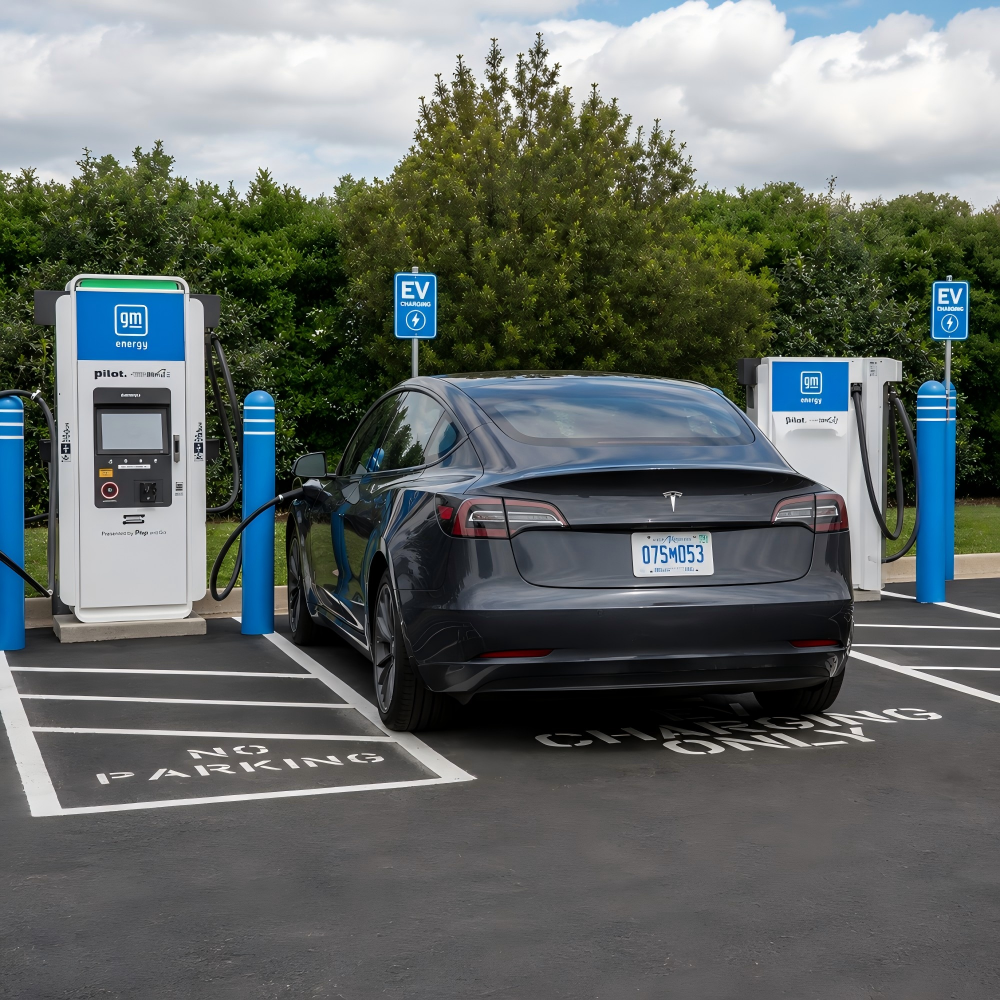 2026-06-23What Touch Technology Is Best for EV Charging Station LCD Displays?
Products
Commercial LCD Display
Gaming LCD Module
Outdoor Display
MINI-LED LCD Display
High Resolution Medical Display
OLED Display
Total Solutions
E-ink LCD Display
Desk VR Monitor
Service
Custom Touch Screen Solutions
Customized Frames & Protective Cover Glass
LCD Driver Board & Accessory Customization
Contact us
Contact Us
Copyright © 2025 Shenzhen Aptus Technology Co.,Ltd All Rights Reserved.

-
Inquire
- Top