Professional commercial display solution provider

Preventing Field Failures in Outdoor Displays: A Deep Dive into LCD Thermal Reliability
Preventing Field Failures in Outdoor Displays: A Deep Dive into LCD Thermal Reliability
In the rapidly expanding world of outdoor digital infrastructure, the "cost of failure" has become a primary KPI for engineering teams. When a digital signage kiosk in a high-traffic urban center or a control panel on a remote oil rig fails, the repercussions extend far beyond a simple repair bill. They involve lost revenue, compromised safety, and significant brand erosion. To mitigate these risks, the industry has standardized the Wide Temperature LCD Module as the benchmark for reliability, specifically targeting the -40°C to +85°C operating range.
Understanding the mechanics of field failure is essential for any developer of outdoor hardware. This article provides an exhaustive analysis of the thermal and environmental stress factors that lead to LCD degradation and the engineering breakthroughs that allow modern modules to maintain peak performance under the most grueling conditions.
The Isotropic Transition: Why Screens Turn Black
The most common failure reported in outdoor displays is the "Black Screen" phenomenon. This typically occurs in mid-afternoon when the sun is at its peak. To the untrained eye, it looks like a power failure, but the reality is a phase transition within the liquid crystal fluid itself.
Understanding the Clearing Point (Tni)
Every liquid crystal mixture has a specific temperature, known as the Clearing Point or Isotropic Transition Temperature, at which it loses its ability to polarize light. In a standard LCD, this threshold is often as low as +50°C or +60°C. In an outdoor setting, the combination of ambient heat and solar radiation (solar loading) can push the internal temperature of the display cavity well beyond these limits.
When the clearing point is reached, the molecules move from a structured, "nematic" state to a disorganized, "isotropic" state. In this state, they cannot block or twist light, resulting in a dark, illegible patch on the screen—usually starting from the center where heat is most trapped. Wide-temperature modules utilize high-Tni fluids that remain stable up to +95°C, providing a critical buffer for the +85°C operational rating.
Solar Loading and the Greenhouse Effect
It is a common misconception that a display rated for +50°C can survive in 40°C weather. Solar loading can add an additional 20°C to 30°C to the internal temperature of the glass. The black polarizers on the LCD surface act as highly efficient heat absorbers. Without a wide-temperature design, the display becomes a heat trap. Engineering for -40°C to +85°C requires not just better fluid, but a mechanical design that facilitates heat dissipation, often involving aluminum back-chassis components and high-thermal-conductivity gap fillers.
The Cold-Start Challenge: Viscosity and Response Time
While heat causes "blackouts," extreme cold causes "stalling." In regions like Northern Europe, Canada, or the Midwestern United States, temperatures frequently drop to -30°C or -40°C.
Rotational Viscosity in Sub-Zero Climates
As temperatures plummet, the viscosity of the liquid crystal fluid increases. At -40°C, the fluid can become nearly solid. This results in a massive increase in response time. A pixel that usually switches in 16 milliseconds might take several seconds to change state in sub-zero temperatures.
For applications requiring real-time data—such as high-speed rail indicators or automated toll booths—this latency renders the equipment useless. A professional-grade Wide Temperature LCD Module uses specialized low-viscosity mixtures that maintain fluid dynamics at -40°C. This allows for a "cold start" without the need for internal heaters. Heaters are often a point of failure themselves; they consume excessive power and can cause uneven thermal expansion, leading to cracked glass. A natively rated -40°C module is inherently more reliable.
UV Degradation and Polarizer "Vinegar Syndrome"
Temperature isn't the only enemy in the outdoors; the sun’s ultraviolet (UV) radiation is equally destructive. Standard polarizers are organic films that break down when exposed to constant UV rays.
The Chemistry of Polarizer Failure
Under intense sunlight and high heat, the chemical bonds in a standard polarizer begin to hydrolyze. This releases acetic acid, which gives off a distinct vinegar-like smell—hence the term "Vinegar Syndrome." This acid then eats away at the metallic traces of the LCD, leading to permanent line defects and total failure.
To prevent this, wide-temperature modules are equipped with UV-resistant, high-durability (HD) polarizers. These films are engineered to withstand thousands of hours of direct exposure without yellowing or delaminating. Furthermore, many industrial modules incorporate an "Anti-UV" coating on the top polarizer to block 99% of harmful rays before they reach the liquid crystal layer.
Mechanical Stress: Thermal Expansion and Contraction
An often-overlooked failure mode is mechanical fatigue caused by the 125-degree temperature swing between -40°C and +85°C.
Material Mismatch
An LCD module is a composite of glass, plastic, metal, and adhesives. Each of these materials has a different Coefficient of Thermal Expansion (CTE). In a cheap display, rapid temperature changes can cause the metal frame to expand faster than the glass, putting immense pressure on the COG (Chip-on-Glass) bonds.
If these bonds are compromised, the result is "flickering" or "intermittent lines." Industrial modules are designed with "floating" frames and stress-relief structures that allow the components to expand and contract independently without damaging the delicate electrical connections.
The Importance of Optical Bonding in Reliability
One of the most effective preventative measures against field failure is optical bonding. By replacing the air gap between the LCD and the cover glass with a clear optical resin, manufacturers solve two major problems:
-
Moisture and Fogging: In high-humidity environments, a traditional "air-bonded" display will develop internal condensation (fogging) as the temperature drops at night. This fogging can take hours to clear, even after the sun comes up. Optical bonding eliminates the air gap entirely, making internal fogging physically impossible.
-
Impact Resilience: Outdoor displays are often targets for vandalism. The resin layer in an optically bonded display acts as a shock absorber, significantly increasing the "IK rating" (impact protection) of the unit.
Conclusion: Engineering for Longevity
The transition to a -40°C to +85°C standard is a response to the growing demand for "unattended reliability." As cities become smarter and industries become more automated, the tolerance for equipment failure has dropped to zero.
Investing in a high-quality Wide Temperature LCD Module is a strategic decision that pays for itself through reduced maintenance cycles and extended product lifespans. From the molecular selection of the liquid crystal fluid to the high-durability polarizers and robust mechanical frames, every element of these modules is optimized for survival.
When your project requires the absolute highest standard in environmental endurance, ensure you are specifying Industrial Outdoor Display Solutions that have been rigorously tested and validated for the full -40°C to +85°C range. In the world of outdoor electronics, resilience is the only path to long-term success.
Recommended reading
 2025-12-29Commercial LCD Display Industry Trends and Market Insights for 2026
 2025-12-23Why Custom Commercial Displays Are Becoming Standard in Modern Systems
 2025-12-17Advancing Outdoor Visual Systems with High-Brightness, Wide-Temperature LCD Technology
 2025-12-10Outdoor Commercial LCD Modules for Wide Temperature High-Brightness Advertising Displays
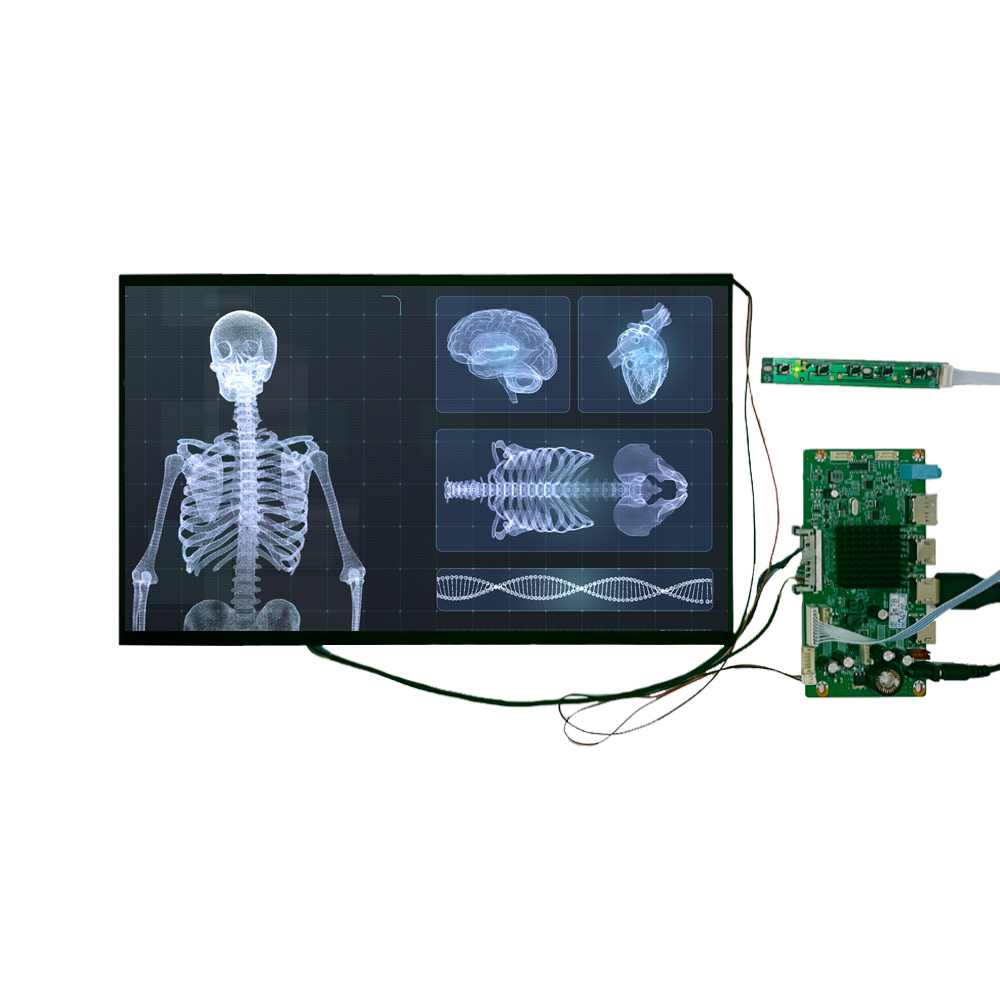 2025-12-0215,6-Zoll 4K Medical Display Module für hochpräzise diagnostische Bildgebung

Products
Commercial LCD Display
Gaming LCD Module
High Resolution Medical Display
Outdoor Display
E-ink LCD Display
Desk VR Monitor
OLED Display
Total Solutions
Service
Custom Touch Screen Solutions
Customized Frames & Protective Cover Glass
LCD Driver Board & Accessory Customization
Contact us
Contact Us
Copyright © 2025 Shenzhen Aptus Technology Co.,Ltd All Rights Reserved.

-
Inquire
- Top