Professional commercial display solution provider

Strategic Procurement Guide: Evaluating the Total Cost of Ownership (TCO) for Wide Temperature LCD Modules
Strategic Procurement Guide: Evaluating the Total Cost of Ownership (TCO) for Wide Temperature LCD Modules
For project managers and lead engineers, the selection of a display interface is often one of the most contentious points in the design phase. It represents a significant portion of the Bill of Materials (BOM) and is the most visible component of the final product. When a project moves from an indoor prototype to a global outdoor deployment, the stakes rise exponentially. The decision to specify a Wide Temperature LCD Module with a -40°C to +85°C rating is not just a technical choice; it is a financial strategy designed to optimize the Total Cost of Ownership (TCO).
In the industrial display sector, the "cheapest" component often becomes the most expensive over the product's lifecycle. This guide explores the economic logic behind high-end display procurement and provides a framework for evaluating the long-term ROI of ruggedized display solutions.
The Pitfalls of the "Unit Price" Mentality
In many procurement departments, success is measured by the reduction of the initial unit price. However, when dealing with extreme environmental electronics, this metric is dangerously incomplete. A standard-temperature LCD might cost 30% less than a wide-temperature equivalent, but its failure rate in a desert or sub-arctic environment can approach 100% within the first year.
Calculating the True Cost of a Field Failure
To understand the value of a -40°C to +85°C module, one must calculate the cost of a single field replacement. This includes:
-
Logistics: Shipping a replacement unit to a remote site (e.g., a wind farm or a coastal oil rig).
-
Labor: The hourly rate of a specialized technician to disassemble the enclosure and swap the module.
-
Downtime: The lost revenue or service disruption while the machine is offline.
-
Brand Equity: The loss of customer trust when a kiosk or charger is consistently "Out of Order."
By analyzing these factors, it becomes clear that preventing just one field failure across a fleet of 100 units more than pays for the "premium" paid for high-durability Industrial Outdoor Display Solutions.
Technical Criteria for High-ROI Procurement
When auditing potential suppliers for wide-temperature modules, procurement teams must look beyond the datasheet. A "True" -40°C to +85°C rating requires a specific set of manufacturing standards that ensure long-term stability.
Liquid Crystal Grade and "Tni" Safety Margins
As discussed in previous technical analyses, the clearing point (Tni) of the liquid crystal is paramount. A high-ROI procurement strategy involves verifying that the supplier uses a liquid crystal mixture with a Tni of at least +95°C. This 10-degree safety margin ensures that even when the module's internal temperature hits its +85°C limit, the optical performance remains stable.
Backlight Longevity and L70 Ratings
The backlight is often the first component to fail in high-temperature environments. Standard LEDs lose their efficiency rapidly when operated near 85°C. A quality industrial supplier will provide "L70" data—the number of hours it takes for the backlight to drop to 70% of its original brightness. For wide-temperature modules, an L70 rating of 50,000 to 70,000 hours at high operating temperatures is the hallmark of a professional-grade component.
Balancing Performance and Budget: The "Sweet Spot"
Not every project requires a military-grade display, but almost every outdoor project requires more than a consumer-grade one. Finding the "sweet spot" involves a tiered approach to selection.
Tier 1: Mission-Critical (-40°C to +85°C)
Reserved for EV charging, aerospace, medical transport, and heavy mining. These modules must feature high-Tni fluids, high-efficiency backlights, and high-durability polarizers. The investment here is focused on 100% uptime and zero-maintenance goals.
Tier 2: Semi-Rugged (-20°C to +70°C)
Suitable for semi-outdoor environments like parking garages or sheltered kiosks. While they offer more protection than consumer screens, they lack the low-viscosity mixtures required for the -40°C "cold start" and the heat-shielding polarizers needed for direct desert sun.
Avoiding the "Consumer Trap"
Using a consumer-grade (0°C to 50°C) screen in an outdoor housing with a fan is a common mistake. Fans fail, filters clog, and the energy required to cool a standard screen often costs more over five years than the initial price difference of a natively rated wide-temperature module.
Supply Chain Stability and Lifecycle Management
For industrial manufacturers, the "Availability" of a component is as important as its "Performance." Consumer LCDs have a lifecycle of 12 to 18 months before they are discontinued. This is a nightmare for industrial products with a 5-to-10-year production life.
Long-Term Availability (LTA)
Industrial Wide Temperature LCD Modules are designed with a 5-to-7-year minimum availability. This means procurement teams don't have to spend hundreds of engineering hours every year "re-spinning" a control board because the previous LCD went EOL (End of Life). This "lifecycle savings" is a massive contributor to the ROI of ruggedized displays.
Consistent BOM Control
A reputable industrial supplier ensures that the Bill of Materials (BOM) remains consistent. In the consumer world, a manufacturer might change the LED driver or the polarizer brand mid-production to save a few cents. In the industrial world, such a change could lead to field failures. Procurement should demand "BOM Locking" agreements to ensure every batch meets the original qualification standards.
The Role of Compliance and Certification
To justify the investment in wide-temperature technology, procurement should require proof of compliance with international standards. This provides the legal and technical assurance that the product will perform as advertised.
-
IEC 60068 Series: The gold standard for environmental testing, covering vibration, thermal shock, and dry heat.
-
MIL-STD-810G: While military-grade, many high-end industrial modules follow these guidelines for extreme temperature and humidity cycles.
-
RoHS and REACH: Ensuring the chemical mixtures in the specialized liquid crystals are compliant with global environmental regulations.
Conclusion: The Strategic Value of Resilience
Procuring a display for an outdoor or industrial environment is an exercise in risk management. While the initial capital expenditure (CAPEX) for a -40°C to +85°C module is higher, the reduction in operational expenditure (OPEX) over the life of the machine is undeniable.
By focusing on the Wide Temperature LCD Module as a strategic asset, companies can build products that are truly "global"—capable of being installed in any climate without the need for localized hardware variants. This standardization simplifies the supply chain, reduces inventory complexity, and ensures that the end-user experience is consistent, whether the machine is in the heat of Australia or the cold of Scandinavia.
Ultimately, the goal of industrial engineering is to create products that vanish into the background because they work perfectly every day. In the world of visual interfaces, that invisibility is only possible through the rigorous selection of Industrial Outdoor Display Solutions that are built to endure the extremes of our planet.
Recommended reading
 2025-12-29Commercial LCD Display Industry Trends and Market Insights for 2026
 2025-12-23Why Custom Commercial Displays Are Becoming Standard in Modern Systems
 2025-12-17Advancing Outdoor Visual Systems with High-Brightness, Wide-Temperature LCD Technology
 2025-12-10Outdoor Commercial LCD Modules for Wide Temperature High-Brightness Advertising Displays
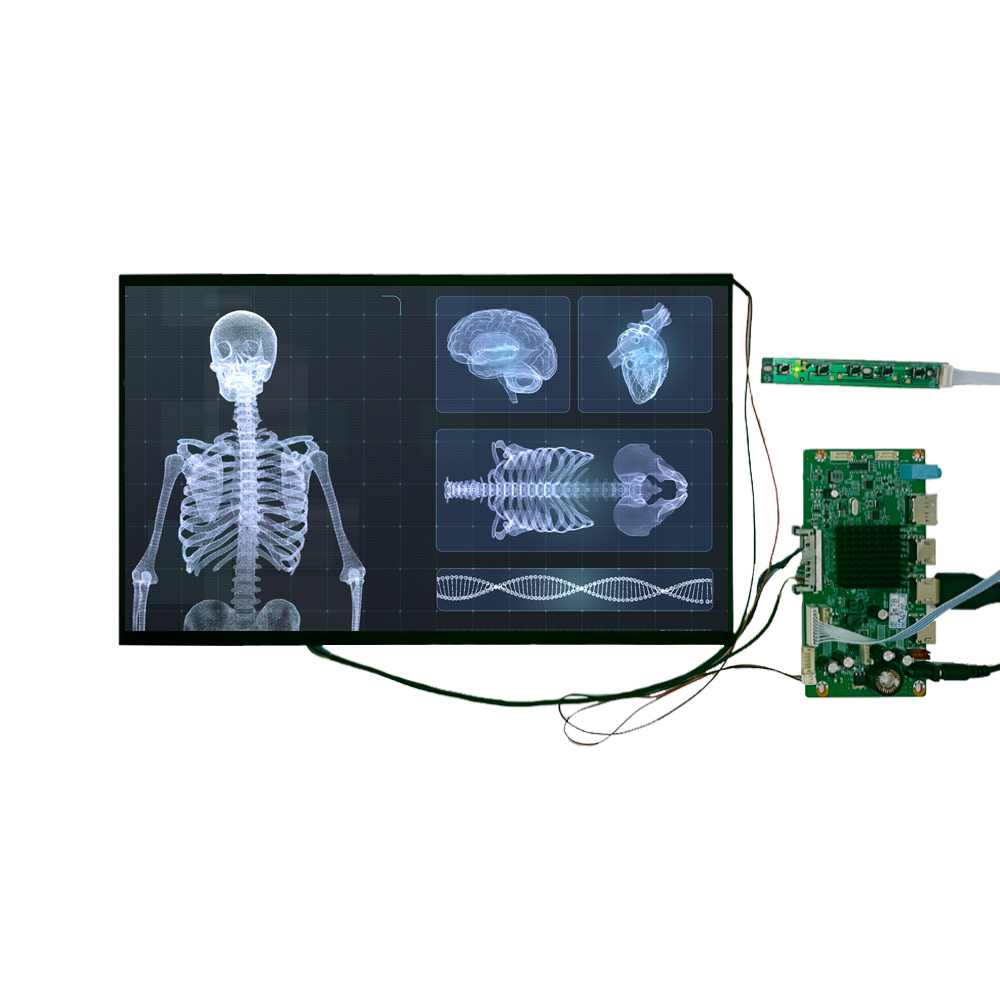 2025-12-0215,6-Zoll 4K Medical Display Module für hochpräzise diagnostische Bildgebung

Products
Commercial LCD Display
Gaming LCD Module
High Resolution Medical Display
Outdoor Display
E-ink LCD Display
Desk VR Monitor
OLED Display
Total Solutions
Service
Custom Touch Screen Solutions
Customized Frames & Protective Cover Glass
LCD Driver Board & Accessory Customization
Contact us
Contact Us
Copyright © 2025 Shenzhen Aptus Technology Co.,Ltd All Rights Reserved.

-
Inquire
- Top