Professional commercial display solution provider

Latest Trends in Healthcare Display Technology and Commercial Signage Applications: 2026 Insights
Latest Trends in Healthcare Display Technology and Commercial Signage Applications
As we move through 2026, display technology stands at the intersection of healthcare innovation and commercial communication. High-resolution, reliable LCD panels are no longer optional — they are foundational to precision medicine, real-time surgical guidance, diagnostic accuracy, and dynamic digital signage that captures attention in retail, transportation, and urban environments.
If you’re researching “latest trends in healthcare display technology and commercial signage applications,” this final article in our four-part series delivers a forward-looking analysis grounded in current market data and real-world applications. We examine how active matrix LCD advancements — exemplified by the Precision 32-Inch 4K LCD Module for Medical Equipment (DBT320DZN51E050B) from DuoBond Display — are shaping both clinical workflows and commercial display ecosystems.
From AI-enhanced medical imaging to energy-efficient 4K digital signage deployments, these trends highlight why medical-grade LCD technology is increasingly influential across industries.
2026 Healthcare Display Technology Trends: AI, Resolution, and Connected Ecosystems
The medical display market continues its robust expansion, with 4K LCD monitors projected to grow at a strong CAGR through 2034 as hospitals and OEMs demand greater diagnostic precision and workflow efficiency. Key trends dominating 2026 include:
1. AI Integration for Enhanced Diagnostics and Real-Time Imaging AI is moving from hype to seamless workflow integration in medical displays. Algorithms now assist with real-time image analysis, noise reduction, edge enhancement, and polyp detection during endoscopy or colonoscopy. High-resolution 4K panels like the DBT320DZN51E050B provide the pixel density (3840 × 2160) and color fidelity (16.7 million colors with 10-bit FRC support) that AI systems require for accurate interpretation. The module’s 14 ms response time and excellent uniformity ensure that AI-augmented feeds remain fluid and artifact-free.
2. Rise of 4K and Ultra-High-Definition Surgical & Diagnostic Monitors 4K medical LCD adoption is accelerating, driven by minimally invasive surgery, robotic platforms, and multi-modality PACS workstations. The 32-inch form factor of the DBT320DZN51E050B strikes the perfect balance: large enough for team collaboration and picture-in-picture layouts yet compact for OR consoles and mobile carts. Its 500 cd/m² brightness and 1500:1 contrast ratio, paired with 25% haze anti-glare coating (3H hardness), deliver clear visibility under bright surgical lighting — a critical advantage as hybrid ORs and interventional suites become standard.
3. Robotics and Immersive Technologies in the OR Surgical robotics continues its rapid expansion. Displays must support low-latency, high-fidelity video feeds for robotic-assisted procedures. The DBT320DZN51E050B’s stable 8-lane eDP interface and slim profile (725.20 × 422.70 mm) make it an ideal integration choice for next-generation robotic systems, simulation labs, and AR/VR training environments.
4. Connected Health Ecosystems and IoMT Internet of Medical Things (IoMT) is expanding rapidly. Medical displays are now part of secure, connected ecosystems that support remote monitoring, digital twins, and real-time data overlays. Low-power operation (12.98 W typical at 60 Hz) and long backlight life (up to 30,000 hours) reduce total cost of ownership while meeting stringent cybersecurity and reliability requirements in 24/7 clinical settings.
5. Sustainability and Ergonomics Hospitals are prioritizing energy-efficient, RoHS-compliant displays with reduced heat output. The DBT320DZN51E050B aligns perfectly with these goals, offering medical-grade durability and ergonomic design that minimizes eye strain during long procedures.
These trends are backed by strong market momentum: the broader medical display sector is incorporating advanced LCD technologies to meet the demands of precision medicine and connected care.
Crossover Applications: How Medical-Grade LCD Technology Powers Commercial Signage Trends
Display innovation does not stop at the hospital door. Many of the same core technologies — high-resolution active matrix LCDs, anti-glare treatments, and reliable backlighting — are transforming commercial signage in 2026.
Key commercial signage trends include:
- AI-Powered Dynamic Content and Personalization: Digital signs now use AI to deliver real-time, context-aware messaging — much like AI-enhanced medical imaging.
- 4K+ Deployments Accelerating: Industry reports show 4K and higher resolution signage growing from 47% to 62% of deployments, mirroring the shift in medical monitors.
- Interactive and Immersive Experiences: Touchless gesture controls, edge computing for resilience, and cloud-first management systems are standard. Medical-grade anti-glare and high-brightness panels excel here, especially in bright retail or outdoor-adjacent environments.
- Sustainability Focus: Energy-efficient LED backlights and long-lifespan modules reduce operational costs — exactly the benefits offered by the DBT320DZN51E050B.
- Localized Growth in Markets like Atlanta: Commercial exterior signs in Atlanta and similar urban areas are rapidly adopting digital displays with quick-update capabilities, energy-efficient LEDs, and high-visibility designs for retail, hospitality, and transportation hubs.
While the DBT320DZN51E050B is optimized for medical equipment, its underlying active matrix TFT-LCD architecture demonstrates the versatility of DuoBond’s display expertise. OEMs and integrators often leverage similar high-performance panels across healthcare and commercial applications, benefiting from proven reliability and integration ease.
Real-World Application Scenarios in 2026
Healthcare
- Surgical endoscopy towers and robotic consoles use the 32-inch 4K module for crystal-clear, multi-source viewing.
- Radiology PACS workstations leverage its resolution and contrast for detailed CT/MRI interpretation.
- Training simulators recreate lifelike OR conditions with wide viewing angles and anti-glare performance.
Commercial Signage Crossover
- High-end retail and corporate lobbies deploy similar 4K LCD technology for interactive wayfinding and promotional content.
- Transportation hubs and healthcare facility signage systems use anti-glare, high-brightness panels for 24/7 readability.
- Atlanta-area businesses upgrade to digital commercial signs that mirror medical display standards for durability and visual impact.
Why the Precision 32-Inch 4K LCD Module Is Future-Proof for 2026 Trends
With its medical-optimized design — 500 cd/m² brightness, 25% haze anti-glare, 1500:1 contrast, and robust eDP connectivity — the DBT320DZN51E050B is perfectly positioned for the convergence of healthcare and commercial display demands. Whether integrated into surgical systems or informing commercial signage platforms, it delivers the performance, longevity, and efficiency that forward-thinking organizations require.
Frequently Asked Questions (FAQ)
Q1: What are the biggest healthcare display trends in 2026? AI integration, 4K/8K resolution adoption, robotics compatibility, IoMT connectivity, and sustainability are leading the way.
Q2: How do commercial signage trends relate to medical displays? Both rely on high-resolution active matrix LCDs, anti-glare technology, and reliable performance in bright or high-traffic environments.
Q3: Is 4K resolution still relevant in 2026 medical and commercial applications? Absolutely. 4K remains the sweet spot for most clinical and signage deployments, offering excellent detail without the cost premium of 8K.
Q4: Can the DBT320DZN51E050B support AI-enhanced workflows? Yes — its high pixel density, fast response time, and accurate color reproduction provide the foundation AI systems need for real-time image processing.
Q5: What makes this module suitable for both medical and commercial crossover projects? Medical-grade reliability, anti-glare coating, low power consumption, and long backlight life translate directly to demanding commercial signage environments.
Q6: How does anti-glare technology benefit commercial digital signs? It ensures readability in bright ambient lighting — whether in retail stores, hospitals, or outdoor-adjacent installations — just as it does in operating rooms.
Q7: Where can I learn more about integrating this 32-inch 4K LCD? Visit the product page for full specifications and OEM support.
Conclusion: Embracing 2026 Display Trends with Proven Technology
The latest trends in healthcare display technology and commercial signage applications point to a future defined by intelligence, clarity, connectivity, and sustainability. The Precision 32-Inch 4K LCD Module (DBT320DZN51E050B) embodies these advancements — delivering the resolution, visibility, and integration flexibility that healthcare providers and commercial integrators need today and tomorrow.
As the final piece in this comprehensive cluster, this article demonstrates how one advanced medical LCD module supports a broad spectrum of visualization needs across clinical and commercial landscapes.
Ready to bring 2026-ready display performance to your medical equipment or commercial signage project? Explore the full specifications and integration options for the Precision 32-Inch 4K LCD Module for Medical Equipment
Complete the Series:
Recommended reading
 2025-12-29Commercial LCD Display Industry Trends and Market Insights for 2026
 2025-12-23Why Custom Commercial Displays Are Becoming Standard in Modern Systems
 2025-12-17Advancing Outdoor Visual Systems with High-Brightness, Wide-Temperature LCD Technology
 2025-12-10Outdoor Commercial LCD Modules for Wide Temperature High-Brightness Advertising Displays
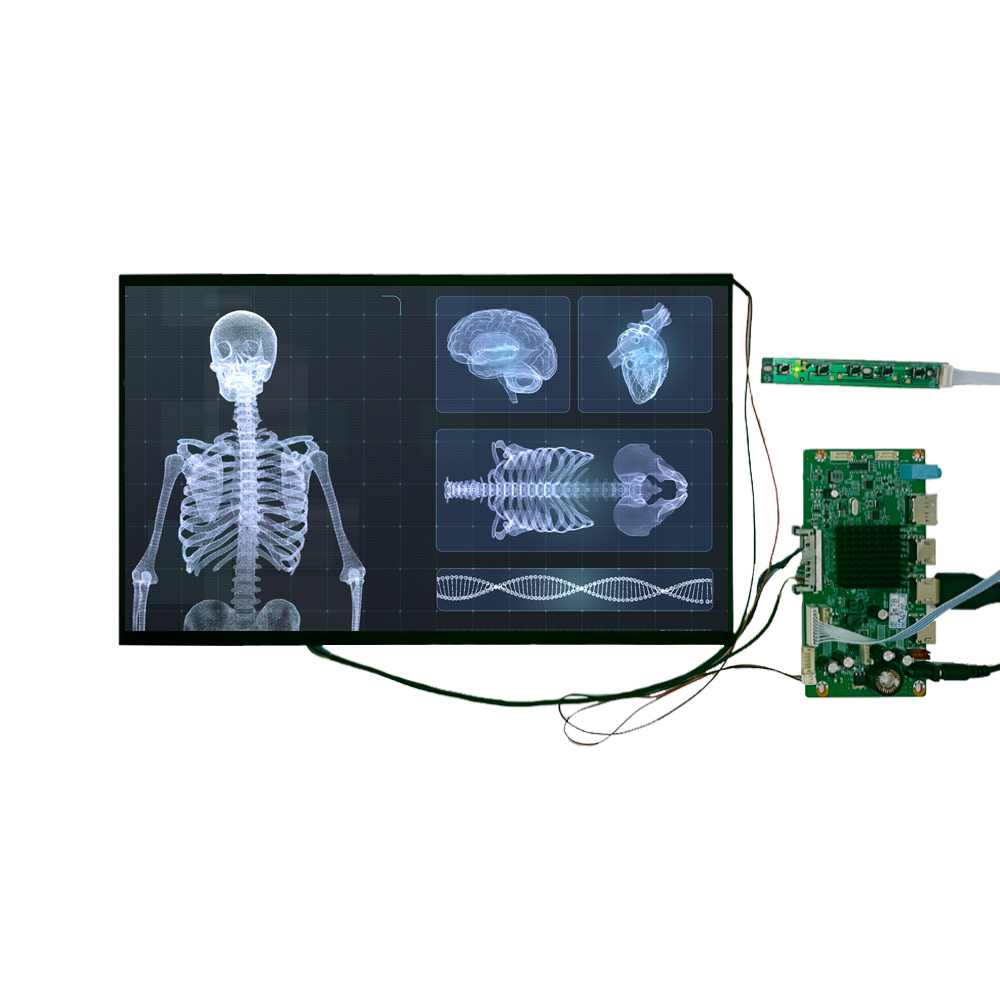 2025-12-0215,6-Zoll 4K Medical Display Module für hochpräzise diagnostische Bildgebung

Products
Commercial LCD Display
Gaming LCD Module
High Resolution Medical Display
Outdoor Display
E-ink LCD Display
Desk VR Monitor
OLED Display
Total Solutions
Service
Custom Touch Screen Solutions
Customized Frames & Protective Cover Glass
LCD Driver Board & Accessory Customization
Contact us
Contact Us
Copyright © 2025 Shenzhen Aptus Technology Co.,Ltd All Rights Reserved.

-
Inquire
- Top