Professional commercial display solution provider

Why Custom Commercial Displays Are Becoming Standard in Modern Systems
Why Custom Commercial Displays Are Becoming Standard in Modern Systems
Commercial displays have evolved significantly over the past decade. No longer limited to basic information output, they now function as essential visual interfaces that connect businesses with users in retail spaces, public environments, and interactive systems. As digital experiences become more immersive and context-driven, commercial display requirements have grown increasingly complex.
In this changing landscape, standard display products often struggle to meet real-world demands. This has led to a growing preference for custom commercial displays, which are designed to align more closely with specific application requirements. Rather than being an optional upgrade, customization is gradually becoming a standard practice in modern commercial display systems.
The Expanding Role of Commercial Displays
Today’s commercial displays are expected to perform reliably across diverse environments while delivering consistent visual quality. They are frequently deployed in locations with high ambient light, continuous operating hours, and limited installation space. In many cases, the display must integrate seamlessly with embedded systems, control boards, and software platforms.
As a result, display selection is no longer a purely visual decision. System designers must consider mechanical integration, electrical compatibility, thermal performance, and long-term availability. These factors have significantly influenced how commercial displays are specified and deployed in modern systems.
Limitations of Standard Commercial Display Products
Off-the-shelf displays are typically designed for broad compatibility rather than application-specific optimization. While this approach offers convenience, it often introduces compromises during system integration. Displays may not fit precisely within enclosures, may lack sufficient brightness for public environments, or may require additional components to achieve compatibility.
Over time, these compromises can increase development complexity and maintenance costs. In contrast, custom commercial displays are designed with the application in mind, reducing the need for adaptation and minimizing long-term operational risks.
Why Custom Commercial Displays Offer Greater Flexibility
Customization allows display specifications to be aligned with real operating conditions. Factors such as size, aspect ratio, brightness, and viewing angle can be adjusted to match the intended use case. This flexibility is particularly valuable in commercial environments where space constraints or unique layout requirements are common.
In retail and signage systems, for instance, non-standard display formats are often required to fit shelving structures or narrow mounting areas. A tailored solution enables designers to maximize visual impact without altering the physical design of the system.
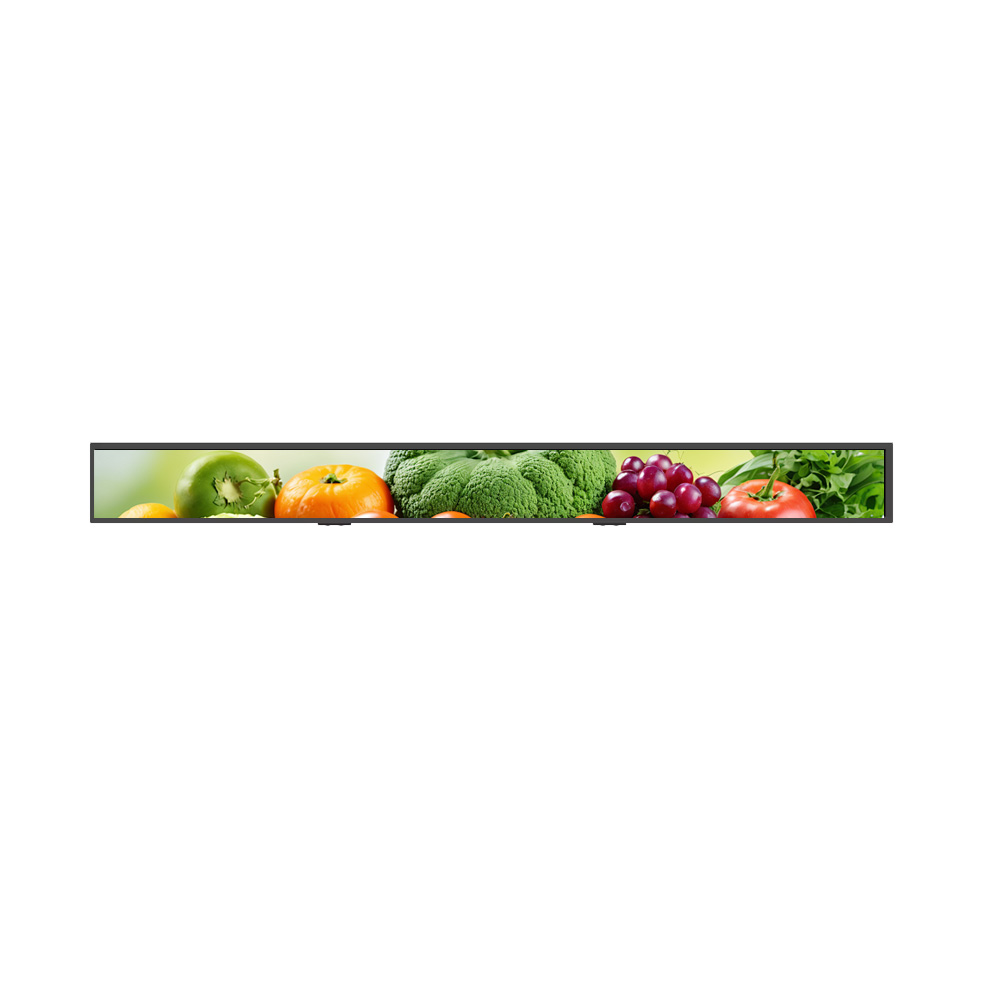
A representative example is the 23.1-inch 1920×158 bar LCD display, which is designed for shelf-edge and retail information systems. Its elongated form factor supports targeted content delivery while maintaining high visibility in commercial display installations.
System Integration and Interface Considerations
Commercial display systems rely heavily on stable signal transmission and efficient power management. Interface selection plays a critical role in ensuring compatibility with the host system and minimizing signal interference. Custom displays allow interface options such as LVDS, HDMI, or MIPI to be selected based on system architecture rather than availability.
By addressing interface and integration requirements during the design phase, custom commercial displays help reduce installation complexity and improve overall system stability. This is particularly beneficial in embedded systems and kiosks, where space and thermal constraints limit design flexibility.
Reliability and Long-Term Performance in Commercial Environments
Many commercial displays are expected to operate continuously for extended periods. Reliability therefore becomes a defining factor in display selection. Custom commercial displays can be designed with component choices and structural considerations that support stable operation over long lifecycles.
Thermal management, consistent backlight performance, and resistance to environmental stress are all critical aspects of long-term reliability. When these factors are incorporated into the design process, displays are better suited to demanding commercial environments where downtime is not an option.
Commercial Applications Driving Demand for Custom Displays
Custom commercial displays are widely used across industries where standard solutions lack flexibility. Retail environments depend on visually engaging displays that adapt to store layouts and branding strategies. Self-service kiosks require displays that support touch interaction while maintaining durability and clarity.
In gaming and entertainment systems, displays contribute directly to user engagement and immersion. Public information systems, such as wayfinding and transportation displays, depend on consistent readability and dependable operation across varying conditions. In each of these scenarios, customization enables better alignment between display performance and application needs.
Industry Trends Supporting Display Customization
The commercial display market continues to evolve alongside broader digital transformation trends. Businesses increasingly seek solutions that deliver long-term value, flexibility, and differentiation rather than short-term cost savings. Customization supports these goals by allowing display solutions to evolve with system requirements.
As digital signage, interactive systems, and embedded displays become more prevalent, the demand for tailored display solutions is expected to continue growing. Custom commercial displays are therefore positioned as a strategic component of future-ready systems.
Conclusion
Custom commercial displays are becoming an integral part of modern system design. By addressing application-specific requirements, improving system integration, and supporting long-term reliability, customized display solutions provide clear advantages over standard products.
As commercial environments become more diverse and performance-driven, the shift toward tailored display solutions reflects a broader industry movement toward optimized, application-focused design. In this context, custom commercial displays are no longer an exception—they are becoming the norm.
Recommended reading
 2025-12-29Commercial LCD Display Industry Trends and Market Insights for 2025
 2025-12-23Why Custom Commercial Displays Are Becoming Standard in Modern Systems
 2025-12-17Advancing Outdoor Visual Systems with High-Brightness, Wide-Temperature LCD Technology
 2025-12-10Outdoor Commercial LCD Modules for Wide Temperature High-Brightness Advertising Displays
 2025-12-0215,6-Zoll 4K Medical Display Module für hochpräzise diagnostische Bildgebung


Products
LCD Module
Curved LCD Module
21:9 Display
High Resolution Medical Display
Outdoor Display
Original Bar Display
E-ink LCD Display
Desk VR Monitor
OLED Display
Service
Custom Touch Screen Solutions
Customized Frames & Protective Cover Glass
LCD Driver Board & Accessory Customization
Contact us
Contact Us
Copyright © 2025 Shenzhen Aptus Technology Co.,Ltd All Rights Reserved.

-
Inquire
- Top