Professional commercial display solution provider

Bar LCD Display Technology: Applications, Design Considerations, and Industry Trends
In recent years, display technology has evolved far beyond traditional 16:9 screens. Among the most noticeable developments is the growing adoption of the Bar LCD display, a stretched and ultra-wide screen format designed to deliver information efficiently in space-limited environments. Unlike conventional LCD panels, bar-type displays prioritize horizontal or vertical elongation, enabling new interaction models across commercial and industrial applications.
This article explores what defines a Bar LCD display, how it differs from standard LCD modules, and why it has become increasingly relevant in modern display ecosystems.
What Is a Bar LCD Display?
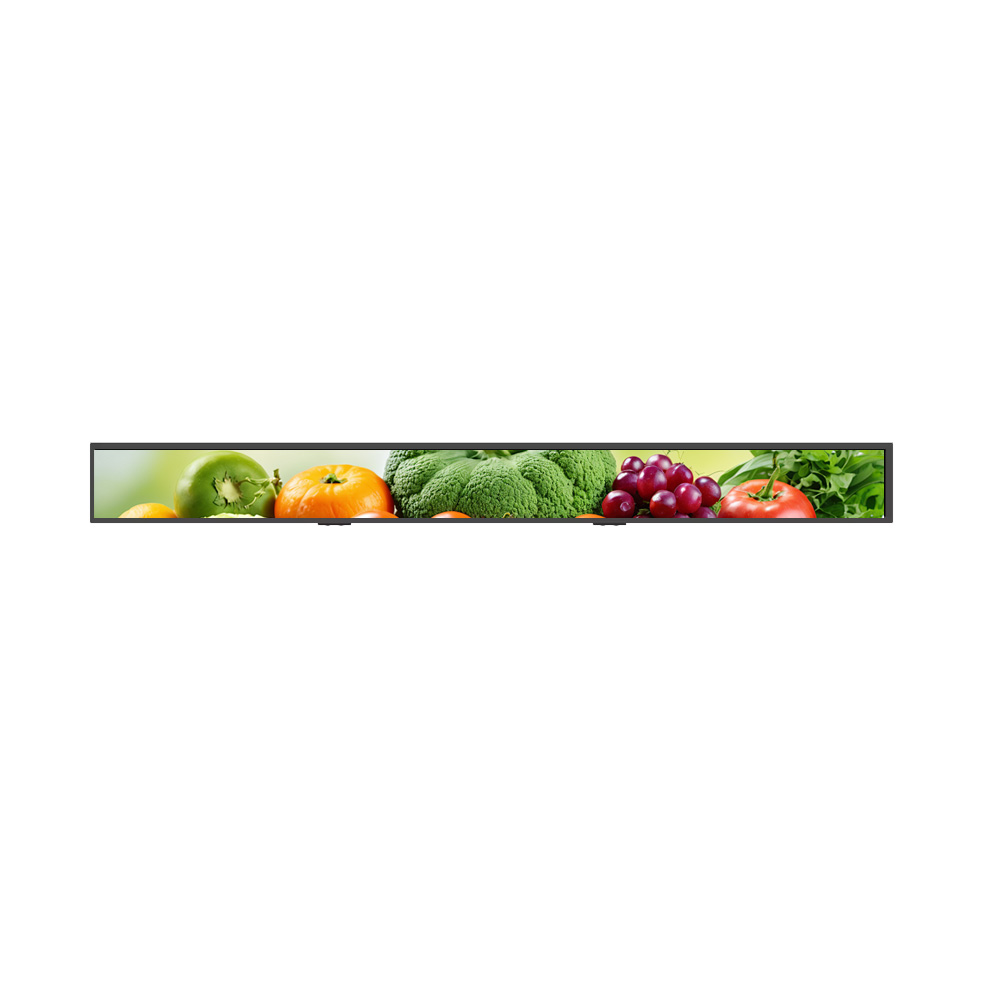
A Bar LCD display refers to an ultra-wide or stretched LCD panel with a non-standard aspect ratio. Common ratios include 8:3, 16:3, or even more extreme formats depending on application requirements. These displays are typically designed for scenarios where vertical height is limited but horizontal visibility is essential.
Unlike consumer displays, bar LCDs are not designed for entertainment. Instead, they focus on information density, readability, and durability, often operating continuously in demanding environments.
From a structural perspective, bar LCD displays usually integrate:
-
Custom-sized TFT LCD panels
-
Optimized backlight systems for uniform brightness
-
Industrial-grade interfaces such as LVDS or MIPI
-
Long-life components suitable for 24/7 operation
Why Standard Displays Are Not Always Enough
Traditional LCD screens follow mainstream aspect ratios because they suit general-purpose use. However, many real-world environments cannot accommodate standard formats. This is where stretched LCD displays offer a clear advantage.
For example, in transportation hubs, shelf-edge retail systems, or equipment control panels, installing a conventional screen may block airflow, interfere with structural components, or waste valuable space. A bar-type LCD module allows designers to integrate visual information seamlessly without redesigning the entire system enclosure.
In addition, elongated displays improve content segmentation, making them ideal for timelines, status indicators, or scrolling data streams.
Common Applications of Bar LCD Displays
Bar LCD displays are widely used across industries due to their flexibility and space-efficient design. Some of the most common application areas include:
Retail and Shelf-Edge Signage
Ultra-wide LCD displays are frequently installed on retail shelves to present pricing, promotions, or dynamic product information. Their narrow height makes them visually unobtrusive while remaining highly readable.
Transportation and Public Information Systems
In metro stations, airports, and bus terminals, bar LCD displays are used for route indicators, arrival times, and directional guidance. Their wide format allows long text strings and multilingual information to be displayed clearly.
Industrial Control and Automation
Industrial bar LCD panels are often embedded into machinery, production lines, or monitoring systems. They can display real-time data such as temperature, pressure, or system status without occupying large control panel areas.
Gaming and Embedded Systems
Slot machines, arcade equipment, and custom embedded devices also benefit from stretched LCD formats, especially where unique UI layouts are required.
Key Technical Considerations When Choosing a Bar LCD Display
Selecting the right bar LCD display involves more than choosing a size. Engineers and product designers typically evaluate several critical parameters:
Brightness and Contrast
Many bar LCD applications operate in brightly lit environments. High brightness and stable contrast ratios are essential to maintain visibility.
Viewing Angle
Wide viewing angles ensure that information remains legible from different positions, especially in public or shared spaces.
Operating Temperature Range
Industrial and transportation environments often require displays that can function reliably across wide temperature ranges.
Interface Compatibility
Bar LCD modules commonly support LVDS or MIPI interfaces, depending on resolution and system architecture.
Mechanical Integration
Custom mounting options and bezel designs are often required to fit the display into non-standard enclosures.
The Role of Original Bar LCD Displays in Custom Projects
As demand grows, many system integrators now prefer original bar LCD displays rather than heavily modified standard panels. Original designs offer better uniformity, longer lifespan, and improved reliability compared to cut-down or repurposed screens.
For projects requiring stable long-term supply and consistent performance, an original bar LCD display solution such as this
Bar LCD display module
provides a reference point for understanding how stretched LCD technology can be implemented in real-world systems.
By using purpose-built panels, designers can avoid common issues such as uneven backlighting, signal instability, or shortened product lifecycles.
Design Challenges and Solutions
Despite their advantages, bar LCD displays also introduce design challenges. Content layout must be carefully planned to avoid excessive whitespace or distorted visuals. Software interfaces often need to be customized to match the unconventional aspect ratio.
From a hardware perspective, thermal management and backlight uniformity become more critical as the panel size increases horizontally. Manufacturers typically address these challenges through optimized LED placement, thermal simulations, and customized driver boards.
Market Trends and Future Outlook
The global demand for bar LCD displays continues to rise as industries seek more efficient ways to present information. Smart retail, intelligent transportation, and industrial digitalization are key drivers behind this trend.
In the future, we can expect further integration of bar-type LCD modules with IoT systems, enabling real-time data updates and remote content management. Advances in low-power backlighting and higher resolution stretched panels will also expand their application scope.
Conclusion
Bar LCD displays represent a specialized yet increasingly important segment of the display industry. Their unique form factor addresses challenges that traditional screens cannot solve, making them indispensable in modern commercial and industrial systems.
By understanding their structure, applications, and technical considerations, businesses and engineers can make informed decisions when integrating ultra-wide LCD technology into their products. As display requirements continue to diversify, the role of bar-type LCD modules will only become more significant.
Recommended reading
 2025-12-29Commercial LCD Display Industry Trends and Market Insights for 2025
 2025-12-23Why Custom Commercial Displays Are Becoming Standard in Modern Systems
 2025-12-17Advancing Outdoor Visual Systems with High-Brightness, Wide-Temperature LCD Technology
 2025-12-10Outdoor Commercial LCD Modules for Wide Temperature High-Brightness Advertising Displays
 2025-12-0215,6-Zoll 4K Medical Display Module für hochpräzise diagnostische Bildgebung


Products
LCD Module
Curved LCD Module
21:9 Display
High Resolution Medical Display
Outdoor Display
Original Bar Display
E-ink LCD Display
Desk VR Monitor
OLED Display
Service
Custom Touch Screen Solutions
Customized Frames & Protective Cover Glass
LCD Driver Board & Accessory Customization
Contact us
Contact Us
Copyright © 2025 Shenzhen Aptus Technology Co.,Ltd All Rights Reserved.

-
Inquire
- Top