Professional commercial display solution provider

- Home
-
Products
Professional commercial display solutions
-
About us
In good faith to customers
-
Service
Provide professional and meaningful advice
-
Knowledge Center
Innovation for development
- Contact us
What is High Haze Anti-Glare Glass for Advertising Displays?
What is High Haze Anti-Glare Glass for Advertising Displays?
In modern digital signage and advertising displays, visibility is everything. Whether it is an outdoor kiosk, transportation information screen, retail advertising display, or self-service terminal, the screen must remain readable under strong ambient light, direct sunlight, and constantly changing viewing conditions. One of the most important optical technologies used to solve this challenge is high haze anti-glare (AG) glass.
High haze anti-glare glass is a specially treated optical surface designed to reduce reflections and improve readability by diffusing incoming light. Instead of allowing light to reflect directly into the viewer’s eyes like a mirror, it scatters light in multiple directions, significantly reducing glare and improving visual comfort.
However, high haze AG glass is not just a simple “anti-reflection layer.” It is a carefully engineered balance between glare reduction and image clarity, making it especially important in advertising displays where both brightness and sharpness matter.
Understanding Anti-Glare (AG) Glass Technology
Anti-glare glass is created by modifying the surface of the glass through chemical etching or micro-roughening techniques. These microscopic structures scatter incoming light instead of reflecting it directly.
In a standard glossy glass surface, light reflects in a single, concentrated direction, creating strong glare and mirror-like reflections. In contrast, AG glass disperses this reflection over a wider angle, reducing visual disturbance.
As a result, the viewer sees a softer, less intrusive reflection, making the display content easier to read even in bright environments.
This technology is widely used in:
- Outdoor advertising displays
- Industrial control screens
- Transportation information systems
- Self-service kiosks
- Medical and public information terminals
What Does “Haze” Mean in Anti-Glare Glass?
To understand high haze anti-glare glass, it is important to understand the concept of haze value.
Haze refers to the percentage of transmitted light that is scattered when passing through the glass. It is a key optical measurement that defines how “matte” or “frosted” the surface appears.
According to optical industry standards, haze is defined as:
The percentage of light that deviates more than 2.5° from the original transmission direction.
In simpler terms:
- Low haze = clearer, sharper image, weaker anti-glare effect
- High haze = stronger glare reduction, softer image appearance
Typical haze ranges in AG glass:
- 5%–10% → Light anti-glare, high clarity
- 10%–20% → Balanced performance
- 20%–40% → Strong anti-glare (common in outdoor displays)
- 40%+ → Very strong diffusion, frosted appearance
High haze AG glass is generally above 20% haze, and in extreme outdoor applications it may go even higher.
What is High Haze Anti-Glare Glass?
High haze anti-glare glass refers to AG glass with a relatively high haze value, typically designed for environments with strong or uncontrolled lighting conditions, such as outdoor advertising screens or high-brightness kiosks.
The key characteristic of high haze AG glass is its ability to heavily diffuse reflected light, reducing glare from sunlight, street lights, and surrounding reflections.
Instead of producing a sharp mirror-like reflection, the surface transforms it into a soft, diffused glow that is far less distracting.
This makes it ideal for advertising displays where content must remain visible at all times, regardless of lighting conditions.
How High Haze Anti-Glare Glass Works
The working principle of high haze AG glass is based on light scattering physics.
When light hits the etched surface of AG glass:
- The micro-structured surface breaks up the light beam
- The reflection is scattered in multiple directions
- Bright reflection hotspots are eliminated
- Glare intensity is significantly reduced
However, this scattering effect also slightly diffuses the transmitted display image. This is why haze level must be carefully controlled depending on application needs.
In high haze AG glass:
- Surface roughness is greater
- Light scattering is stronger
- Reflection suppression is more aggressive
This makes it especially effective in high-brightness environments.
Why Advertising Displays Need High Haze AG Glass
Advertising displays are often installed in challenging environments where lighting cannot be controlled. Examples include:
- Outdoor shopping streets
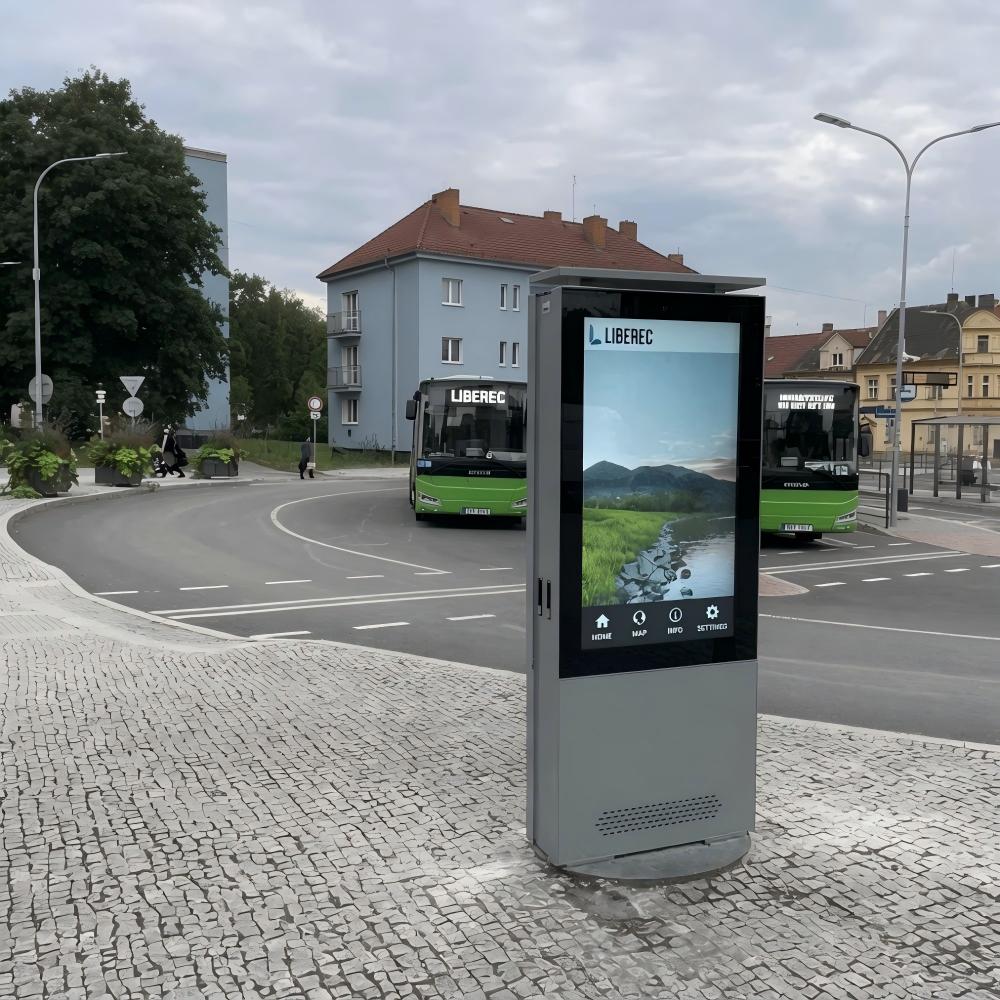
- Bus stops and transportation hubs
- Building facades
- Open-air commercial spaces
In these environments, reflections from sunlight or artificial lighting can completely wash out a normal glossy display.
High haze anti-glare glass solves this issue by:
- Reducing direct reflections
- Improving screen readability in sunlight
- Enhancing content visibility from different viewing angles
- Minimizing viewer distraction caused by mirror effects
Without AG treatment, even a high-brightness LCD panel can become unreadable in direct sunlight.
The Trade-Off: Haze vs Image Clarity
One of the most important design considerations in AG glass is the balance between haze and clarity.
Increasing haze improves anti-glare performance, but it also reduces image sharpness.
This trade-off is a core principle in optical engineering:
- Higher haze → better glare reduction, lower sharpness
- Lower haze → better clarity, weaker glare reduction
As haze increases beyond 20–30%, displays may begin to show:
- Slight image softening
- Reduced contrast
- “Matte” or frosted appearance
- Potential sparkle or grain effects on high-resolution screens
That is why selecting the correct haze level is critical for advertising display performance.
High Haze AG Glass vs Anti-Reflective (AR) Glass
It is important not to confuse AG glass with AR (anti-reflective) glass.
| Feature | High Haze AG Glass | AR Glass |
|---|---|---|
| Technology | Surface etching / scattering | Optical coating interference |
| Function | Diffuses reflections | Cancels reflections |
| Appearance | Matte / frosted | Clear / near invisible |
| Outdoor use | Excellent | Limited (depends on coating) |
| Durability | High | Moderate |
High haze AG glass is generally preferred in industrial and outdoor advertising applications, while AR glass is more commonly used in high-end retail displays or optical applications.
Advantages of High Haze Anti-Glare Glass in Advertising Displays
1. Strong Anti-Glare Performance
High haze levels significantly reduce harsh reflections from sunlight and artificial lighting.
2. Improved Outdoor Readability
Displays remain readable even under high ambient light conditions.
3. Better Viewer Comfort
Reduces eye strain caused by flickering reflections or glare hotspots.
4. Durable Surface Treatment
Etched AG surfaces are highly durable and resistant to UV aging compared to coatings.
5. Stable Performance in Long-Term Use
Suitable for 24/7 operation environments such as transportation and retail advertising networks.
Limitations of High Haze AG Glass
Despite its advantages, high haze AG glass also has trade-offs:
- Slight reduction in image sharpness
- Lower perceived contrast compared to glossy glass
- Possible grain or diffusion effect on high-resolution displays
- Not ideal for ultra-high-definition close-viewing applications
Therefore, selecting haze level must match the use case carefully.
Applications in Modern Display Systems
High haze anti-glare glass is widely used in:
- Outdoor LCD advertising screens
- Digital signage kiosks
- EV charging station displays
- Public transportation information systems
- Industrial HMI interfaces
- Smart city information terminals
In all these applications, visibility under sunlight is more important than perfect pixel sharpness.
Integration with TFT LCD Modules
High haze AG glass is often integrated directly with display systems to enhance performance. In many cases, it is combined with industrial-grade LCD panels to create robust display solutions suitable for harsh environments.
For high-quality display modules and industrial solutions, you can explore:
Outdoor LCD Display
Conclusion
High haze anti-glare glass is a critical optical component in modern advertising display systems. By increasing surface haze through micro-structured etching, it effectively diffuses reflections and ensures that content remains visible even in bright and uncontrolled lighting environments.
While it introduces a trade-off between glare reduction and image sharpness, its benefits in outdoor and high-brightness applications far outweigh its limitations.
As digital signage continues to expand globally, high haze AG glass will remain an essential technology for ensuring reliable visibility, user experience, and advertising effectiveness.
Recommended reading
 2026-06-30What is High Haze Anti-Glare Glass for Advertising Displays?
 2026-06-30Optimizing Display Legibility for Outdoor EV Charging Infrastructure: A Technical Guide to Sunlight-Readable LCD Design
 2026-06-29How Curved LCD Displays Ensure 24/7 Reliability in High-Traffic Gaming Environments
 2026-06-23How Many Nits of Brightness Are Required for an EV Charging Station Display to Be Sunlight-Readable?
 2026-06-23What Touch Technology Is Best for EV Charging Station LCD Displays?


Products
Commercial LCD Display
Gaming LCD Module
Outdoor Display
MINI-LED LCD Display
High Resolution Medical Display
OLED Display
Total Solutions
E-ink LCD Display
Desk VR Monitor
Service
Custom Touch Screen Solutions
Customized Frames & Protective Cover Glass
LCD Driver Board & Accessory Customization
Contact us
Contact Us
Copyright © 2025 Shenzhen Aptus Technology Co.,Ltd All Rights Reserved.

-
Inquire
- Top