Professional commercial display solution provider

- Home
-
Products
Professional commercial display solutions
-
About us
In good faith to customers
-
Service
Provide professional and meaningful advice
-
Knowledge Center
Innovation for development
- Contact us
How Can a Display Screen Remain Clearly Visible in Direct Sunlight?
How Can a Display Screen Remain Clearly Visible in Direct Sunlight?
A display screen can remain clearly visible in direct sunlight by combining high brightness backlight technology, optical bonding, anti-glare surface treatment, high contrast LCD panels, and thermal management solutions. Unlike standard indoor displays, outdoor-readable displays are specifically engineered to overcome strong ambient light, reflections, and temperature variations, ensuring clear images and reliable operation even under direct sunlight.
For outdoor applications such as digital signage, EV charging stations, self-service kiosks, transportation terminals, and outdoor advertising systems, selecting the right Outdoor LCD Display Solution is essential to maintain visibility and long-term performance.
Why Are Standard Displays Difficult to See in Direct Sunlight?
Most standard LCD screens are designed for indoor environments where lighting conditions are controlled. Their typical brightness level is around 200–400 nits, which is sufficient for offices, retail stores, and indoor equipment.
However, direct sunlight can exceed thousands of nits, creating several visibility problems:
- Reflected sunlight washes out the displayed image
- Low contrast makes text and graphics difficult to read
- Glare creates mirror-like reflections on the screen surface
- Colors appear faded under strong outdoor lighting
Even increasing brightness alone cannot completely solve the problem because reflected ambient light reduces the effective contrast between the display image and the surrounding environment.
Therefore, outdoor display visibility requires a combination of optical and electronic technologies.
Key Technologies That Improve Outdoor Sunlight Readability
High Brightness Backlight Technology
The most important factor for outdoor readability is display brightness.
Outdoor LCD displays typically use high-efficiency LED backlight systems with brightness levels ranging from 800 nits to more than 2000 nits, depending on the application environment. Higher brightness allows the display light output to overcome strong ambient illumination and maintain readable content.
Compared with standard LCD modules, high-brightness outdoor displays use:
- High-power LED backlight units
- Improved light guide plate designs
- Optimized optical films
- Enhanced heat dissipation structures
These technologies increase luminance while maintaining uniform brightness across the entire screen.
For applications exposed to direct sunlight, such as outdoor advertising displays or charging station interfaces, a display brightness of 1000 nits or above is commonly recommended.
Optical Bonding Reduces Internal Reflections
Brightness is only one part of sunlight readability. Reflection control is equally important.
Traditional LCD structures contain an air gap between the LCD panel and protective cover glass. When sunlight enters this gap, it creates multiple reflection layers that reduce contrast and make images appear hazy.
Optical bonding technology eliminates this air gap by filling the space with optical-grade adhesive.
Benefits include:
- Reduced internal light reflection
- Improved contrast ratio
- Enhanced sunlight readability
- Better impact resistance
- Prevention of dust and moisture penetration
By removing internal reflections, optical bonding allows more image light to reach the viewer, making outdoor displays clearer even in bright environments.
For outdoor touch displays, optical bonding also improves touch accuracy by increasing structural stability between the LCD panel and touch panel.
Anti-Glare and Anti-Reflective Surface Treatments
Even with high brightness and optical bonding, surface reflection from sunlight can still affect visibility.
Outdoor LCD displays often use additional optical treatments:
Anti-Glare (AG) Coating
Anti-glare treatment diffuses reflected light and reduces sharp reflections.
Advantages:
- Reduces mirror effects
- Improves viewing comfort
- Supports wider viewing angles
This is especially useful for outdoor kiosks where users view the screen from different positions.
Anti-Reflective (AR) Coating
Anti-reflective coatings reduce the amount of light reflected from the front glass surface.
Benefits:
- Higher contrast in bright environments
- Better image clarity
- Improved readability under direct sunlight
The combination of AG or AR treatment with optical bonding significantly improves outdoor viewing performance.
High Contrast LCD Panels Improve Image Clarity
Brightness alone does not guarantee visibility. A display also needs strong contrast performance.
High-contrast LCD panels help maintain:
- Deep blacks
- Clear text
- Accurate colors
- Sharp images
IPS LCD technology is commonly selected for outdoor commercial displays because it provides:
- Wide viewing angles
- Stable color performance
- Better image consistency
For outdoor advertising and information displays, maintaining image quality from different viewing directions is critical.
Thermal Management Ensures Long-Term Outdoor Operation
Outdoor displays face not only sunlight but also extreme temperature changes.
Direct sunlight can significantly increase the internal temperature of a display enclosure. Without proper thermal management, excessive heat may cause:
- Reduced brightness performance
- Shortened backlight lifespan
- LCD color distortion
- Electronic component failures
Reliable outdoor LCD solutions usually include:
- Wide-temperature LCD panels
- Efficient heat dissipation structures
- Temperature monitoring systems
- Intelligent brightness adjustment
These designs allow displays to operate continuously in challenging environments.
Automatic Brightness Adjustment for Changing Light Conditions
Outdoor lighting conditions change throughout the day.
A display installed outdoors may experience:
- Strong midday sunlight
- Cloudy weather
- Evening darkness
- Artificial lighting at night
A brightness control system with ambient light sensors can automatically adjust the backlight level.
Benefits include:
- Maintaining readability throughout the day
- Reducing unnecessary power consumption
- Extending LED backlight lifespan
- Improving user experience
This feature is particularly valuable for 24/7 commercial display applications.
Recommended Design Considerations for Sunlight-Readable Displays
When selecting an outdoor LCD display, engineers should evaluate the following factors:
| Design Factor | Recommended Consideration |
|---|---|
| Brightness | 1000 nits or higher for direct sunlight applications |
| Optical Structure | Optical bonding to reduce reflections |
| Surface Treatment | AG/AR coating for glare reduction |
| LCD Technology | High-contrast IPS panel |
| Temperature Range | Wide-temperature operation |
| Protection | Weather-resistant enclosure |
| Usage Time | Support continuous 24/7 operation |
A successful outdoor display design requires balancing brightness, optical performance, durability, and power consumption.
Applications Requiring Sunlight-Readable Displays
Sunlight-readable LCD technology is widely used in:
Outdoor Advertising Displays
Advertising screens installed in shopping areas, streets, and transportation locations require high brightness and strong contrast to attract attention during daytime.
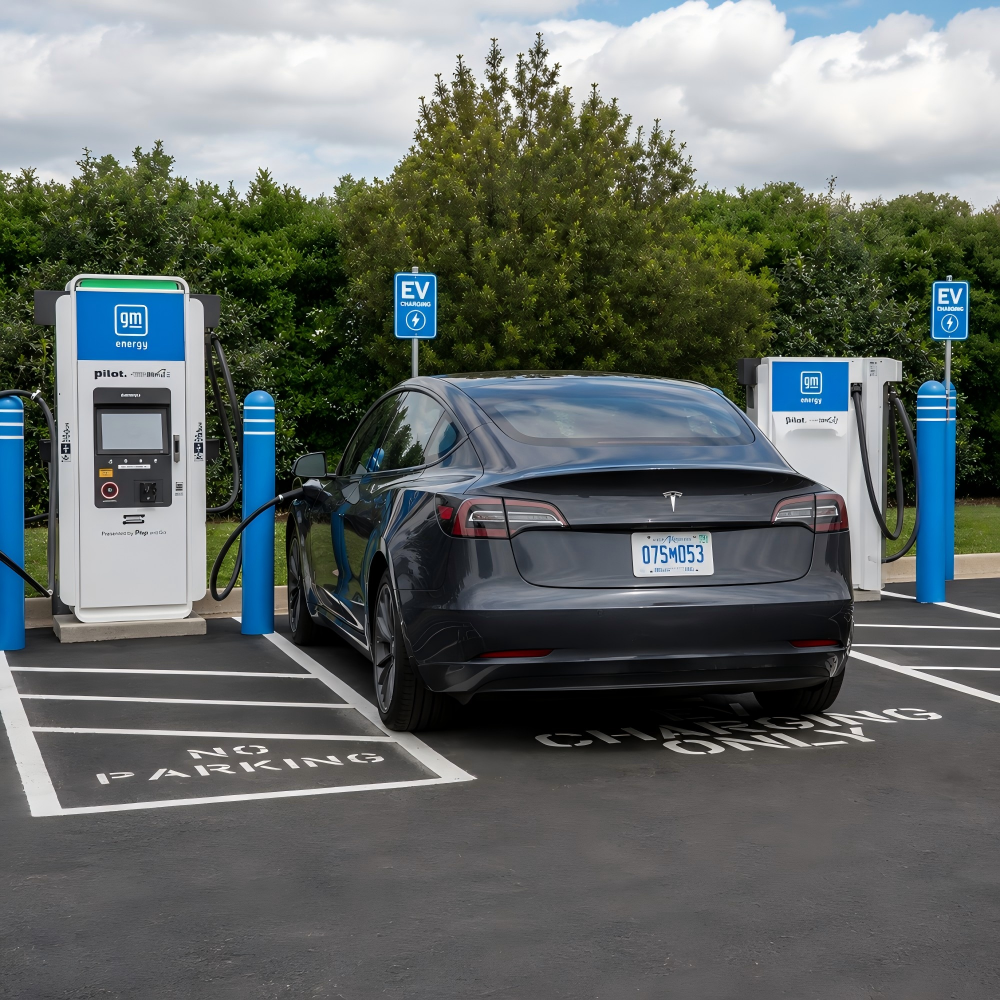
EV Charging Stations
Charging terminals require clear touch interfaces so users can easily operate the system under different weather conditions.
Self-Service Kiosks
Outdoor ticket machines, information kiosks, and payment terminals depend on readable displays for reliable user interaction.
Transportation Information Displays
Bus stations, airports, and outdoor terminals require displays that remain visible throughout the day.
Conclusion
A display screen remains clearly visible in direct sunlight through a combination of high brightness output, optical bonding, anti-glare technology, high-contrast LCD panels, and effective thermal management.
Simply increasing brightness is not enough. A reliable outdoor display must control both emitted light and reflected light to maintain image clarity in harsh outdoor environments.
For companies designing outdoor advertising machines, EV charging equipment, kiosks, and commercial display systems, choosing a specialized Outdoor LCD Display Solution ensures better visibility, durability, and long-term reliability.
Recommended reading
 2026-06-30What is High Haze Anti-Glare Glass for Advertising Displays?
 2026-06-30Optimizing Display Legibility for Outdoor EV Charging Infrastructure: A Technical Guide to Sunlight-Readable LCD Design
 2026-06-29How Curved LCD Displays Ensure 24/7 Reliability in High-Traffic Gaming Environments
 2026-06-23How Many Nits of Brightness Are Required for an EV Charging Station Display to Be Sunlight-Readable?
 2026-06-23What Touch Technology Is Best for EV Charging Station LCD Displays?


Products
Commercial LCD Display
Gaming LCD Module
Outdoor Display
MINI-LED LCD Display
High Resolution Medical Display
OLED Display
Total Solutions
E-ink LCD Display
Desk VR Monitor
Service
Custom Touch Screen Solutions
Customized Frames & Protective Cover Glass
LCD Driver Board & Accessory Customization
Contact us
Contact Us
Copyright © 2025 Shenzhen Aptus Technology Co.,Ltd All Rights Reserved.

-
Inquire
- Top