Professional commercial display solution provider

- Home
-
Products
Professional commercial display solutions
-
About us
In good faith to customers
-
Service
Provide professional and meaningful advice
-
Knowledge Center
Innovation for development
- Contact us
How Does Optical Bonding Technology Improve the Visibility of Outdoor Advertising LCD Displays?
How Does Optical Bonding Technology Improve the Visibility of Outdoor Advertising LCD Displays?
Optical bonding technology improves the visibility of outdoor advertising LCD displays by eliminating the air gap between the LCD panel and cover glass, reducing internal reflections, increasing contrast, and improving sunlight readability. When combined with high-brightness backlights and anti-reflective surface treatments, optical bonding enables commercial displays to maintain clear images even under direct sunlight.
Outdoor advertising LCD displays, such as digital signage, outdoor kiosks, and information displays, often operate in environments with strong ambient light, temperature changes, dust, and humidity. Traditional LCD displays may appear washed out outdoors because sunlight reflects inside the display structure and reduces the contrast between the image and background.
To solve this challenge, professional outdoor LCD solutions increasingly use optical bonding technology as a key optical enhancement method. More information about integrated solutions can be found in Duobond Display’s Outdoor Display Solutions.
What Is Optical Bonding Technology in Outdoor LCD Displays?
Optical bonding is an advanced display assembly process that uses an optical-grade adhesive, such as OCA (Optically Clear Adhesive) or OCR (Optically Clear Resin), to directly bond the LCD panel with the cover glass or touch panel.
In a conventional LCD assembly, there is an air layer between the LCD and protective glass. This air gap creates additional interfaces where light can be reflected and scattered. Under outdoor lighting conditions, these reflections reduce image clarity and make advertising content difficult to see.
With optical bonding, the air gap is completely filled with transparent adhesive, creating a continuous optical path between the LCD module and front glass. This structure reduces light refraction and minimizes internal reflections, allowing more backlight output to reach the viewer.
Why Do Outdoor Advertising LCD Displays Need Optical Bonding?
Outdoor advertising displays face several visibility challenges that indoor displays normally do not encounter:
Strong Sunlight Reflection
Direct sunlight can be significantly brighter than the LCD backlight. When sunlight enters a display with an air gap, it can bounce between the glass and LCD layers, creating glare and reducing perceived contrast.
Even a high-brightness LCD panel may become difficult to read if the internal reflection problem is not addressed.
Reduced Contrast in Outdoor Environments
Outdoor visibility depends not only on brightness but also on contrast. A display with high brightness but poor reflection control may still appear faded because the black level becomes brighter due to reflected ambient light.
Optical bonding reduces these unwanted reflections, helping maintain deeper blacks and more accurate colors.
Long-Term Reliability Requirements
Outdoor advertising LCD displays typically operate continuously for long hours. The display structure must withstand:
- Temperature fluctuations
- High humidity
- Dust exposure
- Outdoor vibration
- Long-term UV exposure
Optical bonding improves mechanical strength and reduces the possibility of moisture or dust entering the space between the LCD panel and cover glass.
How Optical Bonding Improves Outdoor LCD Visibility
Reduces Internal Reflection and Glare
The biggest advantage of optical bonding is reflection reduction.
In a traditional air-bonded display:
Cover glass → Air gap → LCD panel
Each material boundary can reflect incoming light. When sunlight enters the display, part of the light is reflected back toward the viewer, creating glare.
Optical bonding changes the structure into:
Cover glass → Optical adhesive → LCD panel
Because the adhesive has a refractive index closer to glass and LCD materials, light passes through with fewer reflections.
The result is:
- Less glare
- Higher contrast ratio
- Clearer images
- Better sunlight readability
Improves Perceived Brightness Without Increasing Power Consumption
Many outdoor LCD displays use high-brightness backlights, sometimes exceeding 1000 nits, to overcome sunlight.
However, simply increasing brightness increases:
- Power consumption
- Heat generation
- Cooling requirements
- Operating costs
Optical bonding improves light transmission efficiency by reducing optical losses. This means more of the LCD backlight reaches the viewer, allowing the display to appear brighter without continuously increasing LED backlight power.
For commercial outdoor advertising applications, this helps balance visibility and energy efficiency.
Enhances Color Accuracy and Image Quality
Outdoor advertising relies heavily on visual impact. Faded colors or low contrast can reduce advertising effectiveness.
Optical bonding improves:
- Color saturation
- Image sharpness
- Black level performance
- Viewing experience from different angles
This is especially important for:
- Outdoor digital signage
- Shopping mall advertising screens
- Transportation displays
- Self-service kiosks
- Public information displays
Prevents Condensation Between Display Layers
Outdoor environments often experience rapid temperature changes. When a traditional display contains an air gap, moisture can accumulate between the glass and LCD panel, causing:
- Fogging
- Water marks
- Reduced visibility
- Long-term display damage
Optical bonding eliminates the internal air space, reducing the possibility of condensation forming inside the display structure.
This improves reliability for displays installed in:
- Rainy climates
- Coastal areas
- High-humidity regions
Optical Bonding vs Air Bonding Outdoor LCD Displays
| Feature | Optical Bonding Display | Traditional Air Bonding Display |
|---|---|---|
| Air gap | Eliminated | Exists between layers |
| Sunlight readability | Excellent | Limited |
| Internal reflection | Reduced | Higher |
| Contrast performance | Improved | Lower |
| Condensation risk | Lower | Higher |
| Mechanical strength | Higher | Lower |
| Outdoor reliability | Better | Limited |
For outdoor advertising applications where displays must remain visible throughout the day, optical bonding provides a significant advantage over traditional display structures.
Does Optical Bonding Replace High-Brightness LCD Technology?
No. Optical bonding and high-brightness LCD technology solve different problems.
A reliable outdoor advertising LCD display usually combines multiple technologies:
High-Brightness Backlight
Provides sufficient luminance to overcome strong ambient lighting.
Optical Bonding
Reduces internal reflections and improves contrast.
Anti-Reflective (AR) Coating
Minimizes surface reflection from sunlight.
Thermal Management Design
Maintains stable operation during high-temperature outdoor conditions.
A complete outdoor display solution requires the combination of optical, electrical, and mechanical engineering.
Applications That Benefit from Optical Bonding Outdoor LCD Displays
Optical bonding technology is widely used in commercial outdoor display applications, including:
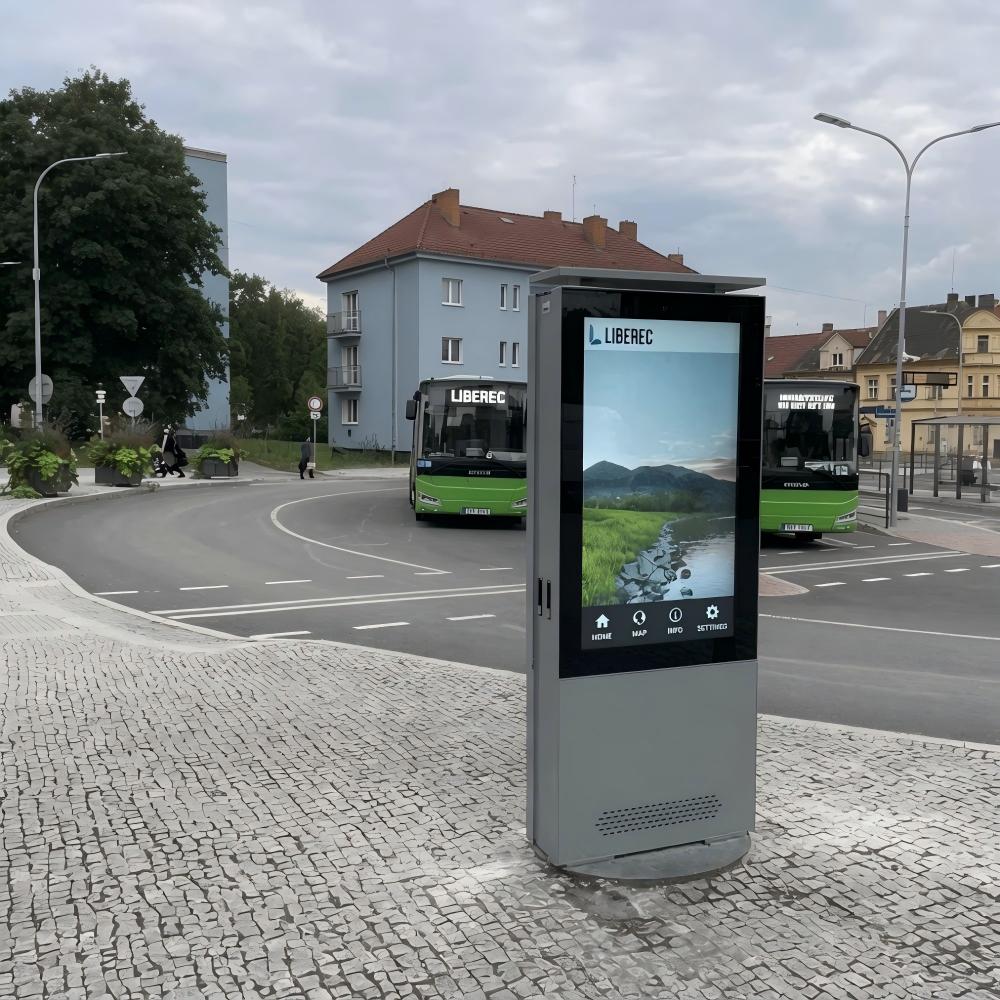
Outdoor Digital Advertising Displays
Advertising screens installed on streets, buildings, and public areas require excellent visibility throughout the day.
Outdoor Self-Service Kiosks
Ticket machines, ordering kiosks, and information terminals need clear viewing under changing lighting conditions.
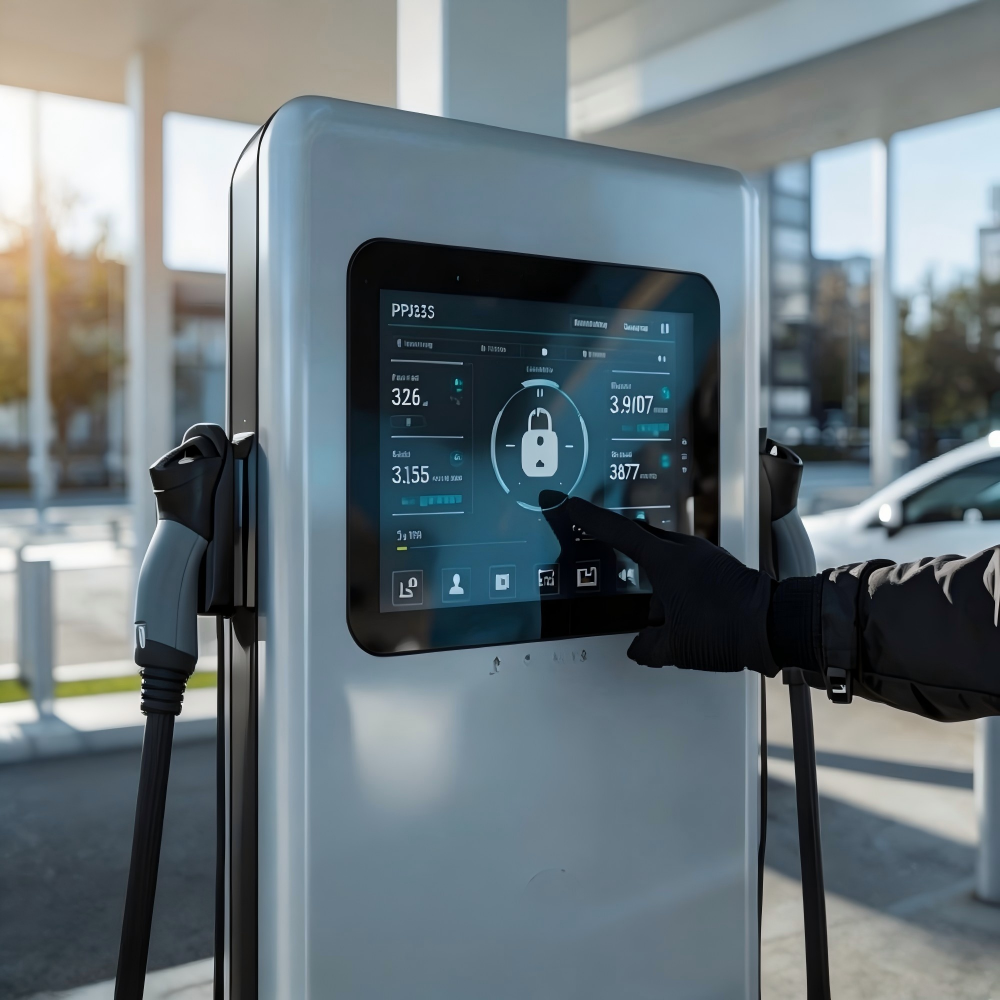
EV Charging Station Displays
Charging stations installed outdoors require displays that remain readable in direct sunlight and different weather conditions.
Transportation Information Displays
Bus stations, airports, and public information systems depend on stable visibility for passenger communication.
How to Select an Outdoor Advertising LCD Display With Optical Bonding?
When selecting an outdoor LCD display, buyers should evaluate more than brightness specifications.
Important factors include:
Optical Bonding Method
Check whether the display uses full optical bonding between the LCD and cover glass instead of partial bonding.
Display Brightness
Brightness should match the installation environment. Direct sunlight applications typically require higher brightness levels.
Thermal Design
Outdoor displays need effective cooling solutions to manage heat from high-brightness backlights.
Protection Level
For outdoor installations, consider:
- Waterproof protection
- Dust resistance
- Impact resistance
- Wide operating temperature range
Viewing Angle
Advertising displays should maintain image quality from different viewing positions.
Conclusion
Optical bonding technology significantly improves the visibility of outdoor advertising LCD displays by eliminating the air gap between the LCD panel and protective glass. This reduces internal reflections, enhances contrast, improves sunlight readability, and increases long-term durability.
For outdoor commercial applications, optical bonding should be considered a fundamental technology rather than an optional upgrade. When combined with high-brightness LCD panels, anti-reflective treatments, and proper thermal design, optical bonding enables advertising displays to deliver clear and reliable performance in demanding outdoor environments.
For businesses looking for customized outdoor commercial display solutions, Duobond Display provides professional outdoor LCD display designs optimized for high visibility and long-term outdoor operation.
Recommended reading
 2026-06-30What is High Haze Anti-Glare Glass for Advertising Displays?
 2026-06-30Optimizing Display Legibility for Outdoor EV Charging Infrastructure: A Technical Guide to Sunlight-Readable LCD Design
 2026-06-29How Curved LCD Displays Ensure 24/7 Reliability in High-Traffic Gaming Environments
 2026-06-23How Many Nits of Brightness Are Required for an EV Charging Station Display to Be Sunlight-Readable?
 2026-06-23What Touch Technology Is Best for EV Charging Station LCD Displays?


Products
Commercial LCD Display
Gaming LCD Module
Outdoor Display
MINI-LED LCD Display
High Resolution Medical Display
OLED Display
Total Solutions
E-ink LCD Display
Desk VR Monitor
Service
Custom Touch Screen Solutions
Customized Frames & Protective Cover Glass
LCD Driver Board & Accessory Customization
Contact us
Contact Us
Copyright © 2025 Shenzhen Aptus Technology Co.,Ltd All Rights Reserved.

-
Inquire
- Top