Professional commercial display solution provider

- Home
-
Products
Professional commercial display solutions
-
About us
In good faith to customers
-
Service
Provide professional and meaningful advice
-
Knowledge Center
Innovation for development
- Contact us
How Do Bus Station Advertising Displays Resist Outdoor Weather?
How Do Bus Station Advertising Displays Resist Outdoor Weather?
Bus station advertising displays are designed to withstand outdoor weather conditions through weatherproof enclosure structures, high-brightness LCD technology, thermal management systems, and durable commercial-grade components. These displays can operate reliably under rain, sunlight, dust, humidity, and temperature fluctuations, making them suitable for long-term outdoor digital signage applications.
Unlike indoor commercial screens, bus station advertising displays are exposed to constantly changing outdoor conditions. They must maintain clear visibility and stable performance while facing direct sunlight, heavy rain, dust, moisture, and seasonal temperature changes. Professional outdoor display systems integrate multiple protection technologies, including sealed cabinets, IP-rated protection, anti-condensation structures, and high-reliability LCD modules.
For businesses requiring reliable solutions for transportation advertising, outdoor display solutions provide customized display systems designed for demanding outdoor environments.
Weatherproof Enclosure Protects Internal Components
The enclosure is the first line of defense against outdoor environmental factors. Unlike standard indoor displays, bus station advertising displays use specially designed outdoor cabinets to prevent water, dust, and contaminants from reaching sensitive electronic components.
A weather-resistant enclosure typically includes sealed cabinet structures, waterproof cable connections, corrosion-resistant materials, and protective front glass. These designs help reduce the risk of circuit corrosion, moisture damage, and component failure caused by long-term outdoor exposure.
For bus stations located in coastal or high-humidity areas, corrosion-resistant materials and improved sealing designs are especially important to maintain long-term reliability.
High Brightness LCD Technology Ensures Clear Visibility in Sunlight
Direct sunlight is one of the biggest challenges for outdoor advertising displays. Standard indoor LCD screens often suffer from low contrast and poor readability when installed outdoors.
Bus station advertising displays typically use high-brightness LCD panels with optimized LED backlight systems to maintain clear images throughout the day. Depending on the installation environment, outdoor displays may require brightness levels ranging from 1000 nits to more than 3000 nits for direct sunlight applications.
High brightness technology ensures that advertisements, transportation information, and public announcements remain visible even during strong daylight conditions.
IP Protection Prevents Water and Dust Ingress
Outdoor advertising displays must protect internal electronics from rain, dust, and airborne particles. The IP rating is an important specification for evaluating the protection capability of outdoor display systems.
Many bus station advertising displays use IP65-rated protection, which provides complete dust protection and resistance against water jets from different directions.
This level of protection helps ensure reliable operation in outdoor locations such as bus stops, transportation hubs, roadside advertising areas, and public information terminals.
Thermal Management Maintains Stable Operation
Outdoor displays experience significant temperature variations throughout the year. A display installed at a bus station may be exposed to high temperatures under direct sunlight during the day and much colder conditions at night.
Without effective thermal management, excessive heat can reduce LCD panel lifetime, affect backlight performance, and cause electronic system failures.
Professional outdoor advertising displays use thermal control solutions such as cooling fans, heat dissipation structures, temperature sensors, and intelligent airflow management systems. For cold environments, heating solutions can also be integrated to maintain stable operation.
Anti-Condensation Design Reduces Moisture Problems
Outdoor environments often create condensation risks due to temperature differences between daytime and nighttime. Moisture inside the display enclosure can cause fogging, electronic corrosion, and unstable operation.
To prevent these issues, outdoor advertising displays incorporate anti-condensation designs, including sealed structures, internal humidity management, heating components, and moisture-resistant materials.
These technologies help maintain clear image quality and reliable operation in humid climates.
Protective Glass Improves Durability in Public Areas
Since bus station advertising displays are installed in public spaces, the front protection layer must withstand daily environmental impact.
Outdoor displays often use strengthened protective glass to improve resistance against accidental impact, dust, wind-blown objects, and long-term outdoor exposure.
A durable front glass structure also helps maintain display clarity while protecting the LCD module from external damage.
Commercial-Grade Components Support Continuous Operation
Bus station advertising displays usually operate for extended periods every day, displaying advertisements, transportation schedules, and public information.
To support continuous operation, these systems use reliable commercial-grade components, including TFT LCD modules, long-life LED backlights, stable driver boards, and optimized power management systems.
Compared with consumer TVs, commercial outdoor displays are designed for longer operating hours and more challenging environmental conditions.
Designed for Different Outdoor Weather Conditions
A reliable bus station advertising display must handle multiple environmental challenges at the same time.
| Outdoor Challenge | Protection Solution |
|---|---|
| Strong sunlight | High brightness LCD panel |
| Heavy rain | Waterproof enclosure design |
| Dust and pollution | Sealed cabinet structure |
| High temperature | Thermal management system |
| Low temperature | Heating and wide-temperature components |
| Humidity | Anti-condensation design |
| Public installation | Protective glass and durable housing |
Why Choose Outdoor Display Solutions for Bus Station Advertising?
Bus station advertising displays require more than a bright screen. They need a complete outdoor display system that combines visibility, durability, and environmental protection.
A professional outdoor display solution integrates:
- High brightness LCD technology
- Weather-resistant enclosure design
- Waterproof and dustproof protection
- Thermal management systems
- Anti-condensation technology
- Long-term commercial operation capability
These technologies allow outdoor advertising displays to maintain stable performance in transportation environments, even under changing weather conditions.
Duobond Display provides customized outdoor display solutions with LCD modules, touch panel integration, protective structures, and display configurations designed for outdoor commercial applications.
FAQ
Can outdoor advertising displays work in heavy rain?
Yes. Outdoor advertising displays use waterproof enclosure structures and IP-rated protection designs to operate reliably in rainy environments.
Why do bus station displays need higher brightness than indoor displays?
Because outdoor displays are exposed to direct sunlight, higher brightness LCD panels are required to maintain image clarity and readability.
How do outdoor advertising displays prevent overheating?
They use thermal management systems, including cooling solutions, heat dissipation structures, and temperature monitoring technologies.
Can outdoor displays operate in cold weather?
Yes. Many outdoor display solutions support wide operating temperature ranges and can include heating systems for cold environments.
What type of display is suitable for bus station advertising?
High-brightness TFT LCD modules combined with weatherproof enclosure designs are commonly used because they provide excellent visibility, durability, and long service life.
Recommended reading
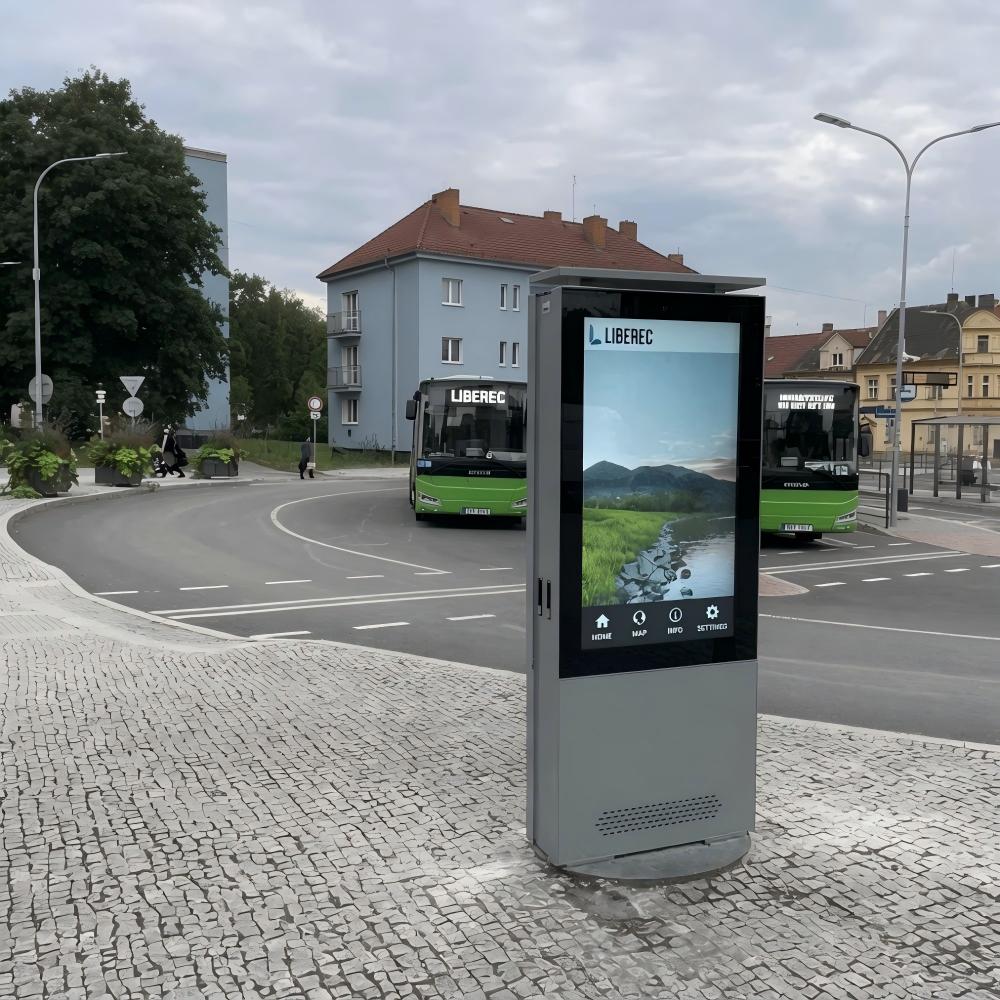 2026-06-30What is High Haze Anti-Glare Glass for Advertising Displays?
 2026-06-30Optimizing Display Legibility for Outdoor EV Charging Infrastructure: A Technical Guide to Sunlight-Readable LCD Design
 2026-06-29How Curved LCD Displays Ensure 24/7 Reliability in High-Traffic Gaming Environments
 2026-06-23How Many Nits of Brightness Are Required for an EV Charging Station Display to Be Sunlight-Readable?
 2026-06-23What Touch Technology Is Best for EV Charging Station LCD Displays?

Products
Commercial LCD Display
Gaming LCD Module
Outdoor Display
MINI-LED LCD Display
High Resolution Medical Display
OLED Display
Total Solutions
E-ink LCD Display
Desk VR Monitor
Service
Custom Touch Screen Solutions
Customized Frames & Protective Cover Glass
LCD Driver Board & Accessory Customization
Contact us
Contact Us
Copyright © 2025 Shenzhen Aptus Technology Co.,Ltd All Rights Reserved.

-
Inquire
- Top